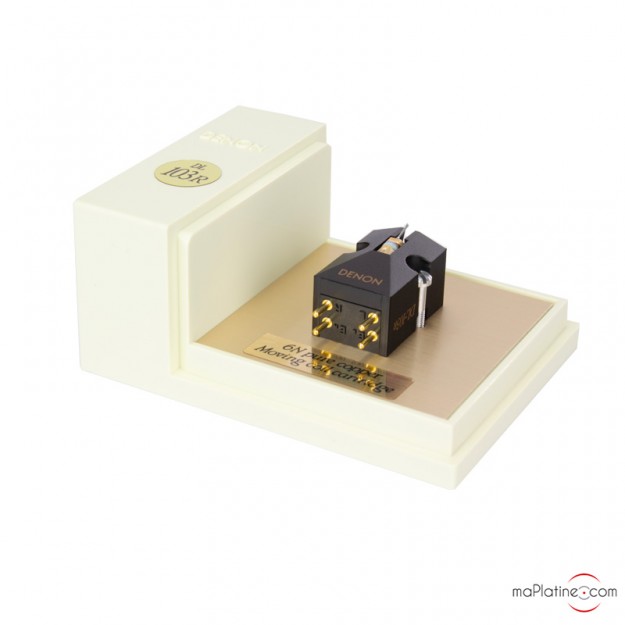
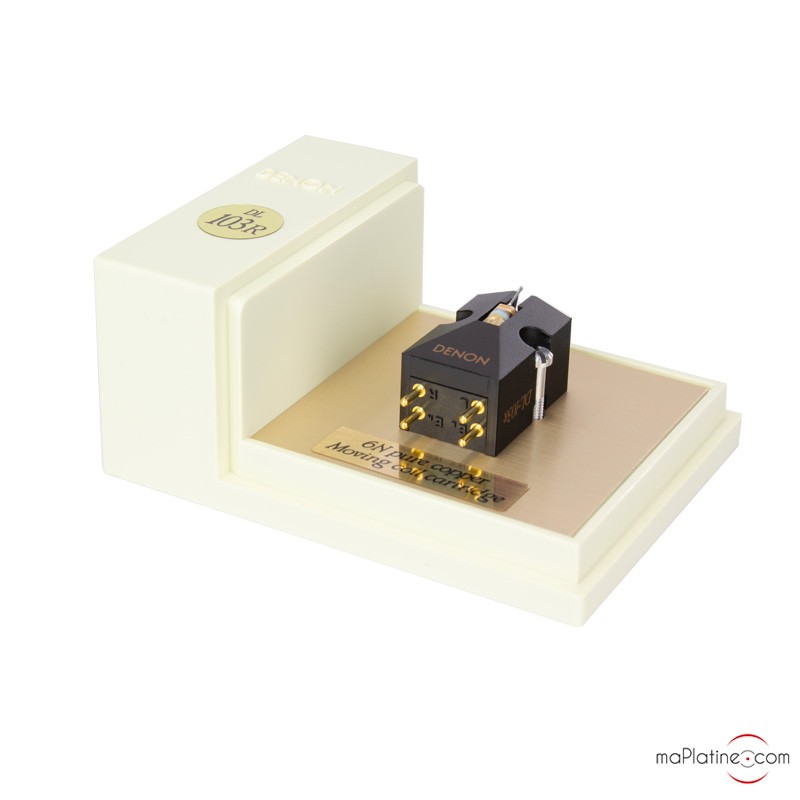
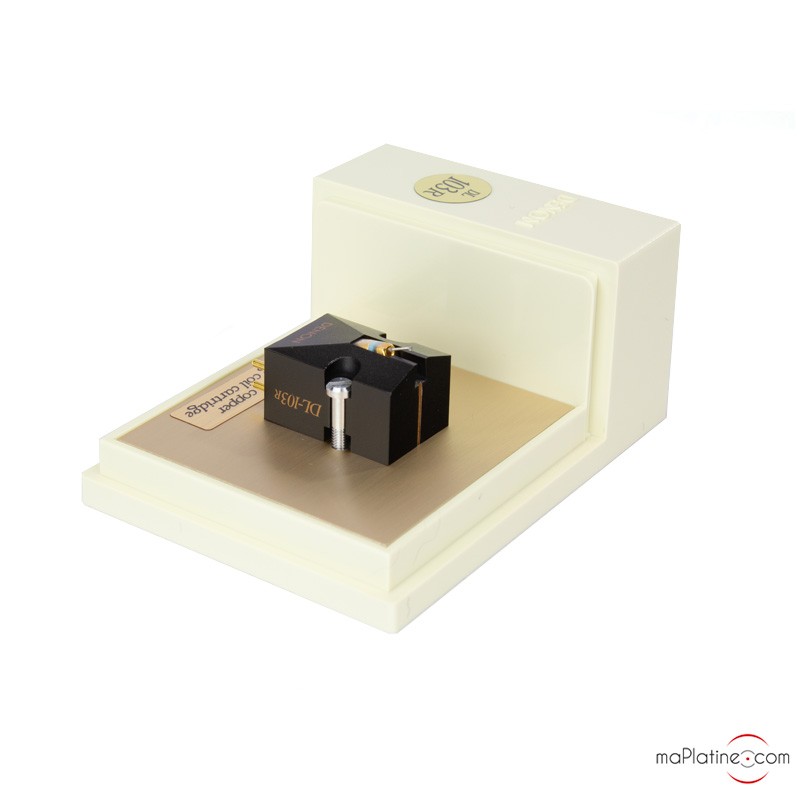
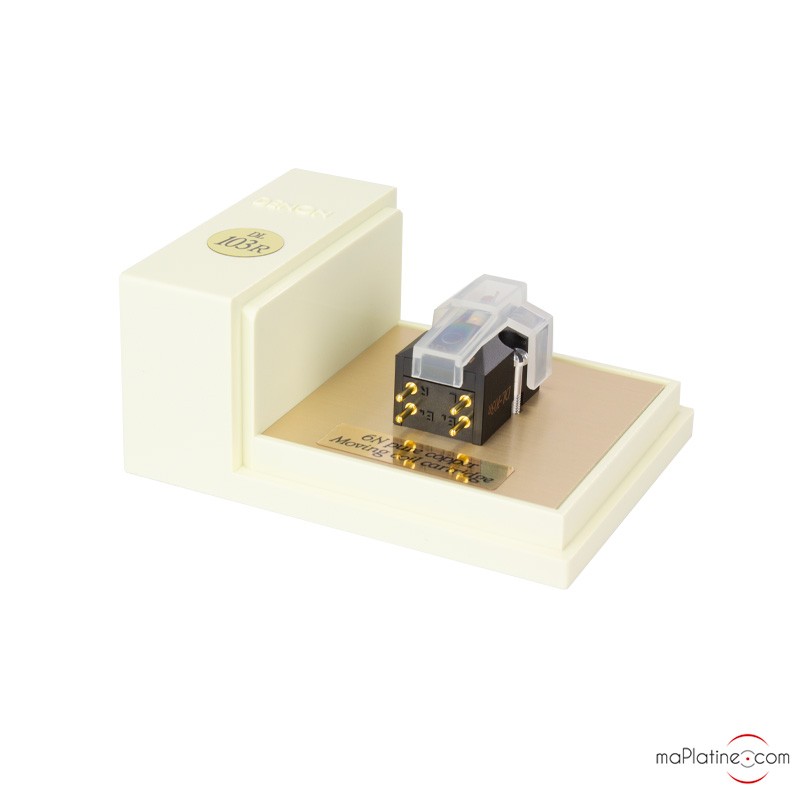
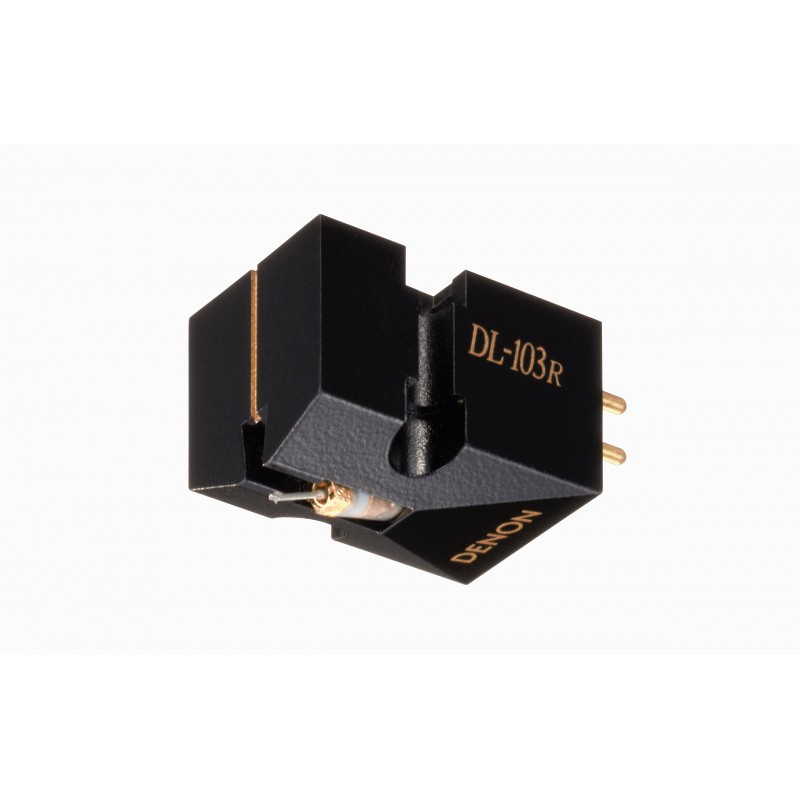
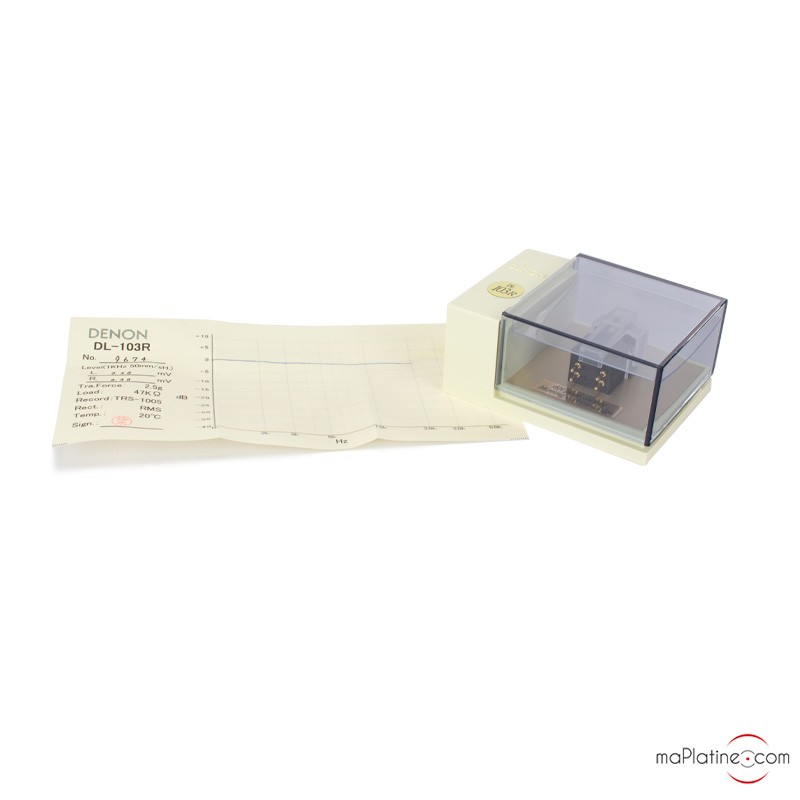
The Denon DL-103 MC cartridge (standard) was created in 1964. This cartridge was made in collaboration with the Japan Broadcasting Corporation Research Laboratories. The initial project was to conceive a high performance and highly reliable phono cartridge for broadcasting purposes, particularly Japanese AM and FM broadcasting stations.
Multiple versions of this cartridge were produced over the years. But apart from the standard version, a single improved version (DL-103R) still exists.
DENON DL-103R: Technology
The DL-103R MC cartridge is an improved and more modern version of the DL-103 MC cartridge. Of course, the cartridge keeps its simple design and superb reliability. It's, therefore, a very low output moving coil cartridge and, contrary to the DL-103, the R version has low impedance.
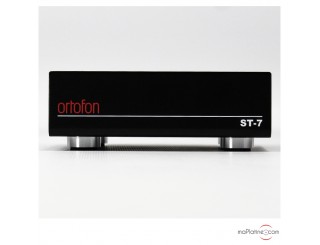
Output voltage is even lower and was reduced from 0.3 mV to 0.25 mV. This very low value requires an MC phono preamplifier having a 65-dB gain minimum! A transformer is conceivable as its internal impedance is 14 ohms. An Ortofon ST-7 transformer, for example, would be compatible.
The armature of the Denon DL-103R MC cartridge is placed in parallel magnetic fields. The coils are wound around the armature and generate the voltage when the moving system moves. The cartridge design is perfectly symmetrical between the left and right channels to obtain stable dynamic characteristics.
The moving system is held by a short and thin piece of piano wire.
One of the major features of this system is that the stylus tip moves up and down and from side to side but does not move in the forward direction of the groove. For this reason, an optimum damper can be used regardless of the fulcrum.
The coils of the DL-103R MC cartridge are slightly less wound and use high-purity 6N copper wire. This helps save weight and thus improves dynamics and transparency.
DENON DL-103 R: Diamond
The stylus used is very hard and resistant. It is cut and mounted taking the crystal's orientation into account. This puts its hardest part in contact with the record groove.
Historically, this stylus features a conical profile. It is mounted on a two-part cantilever made of a light alloy. This twofold construction of the cantilever limits vibrations while remaining light and highly robust.
The optimal tracking force of the stylus is 2.5 g ± 0.3 g.
With an undistorted record in good condition, the tracking force can be reduced to 2.2 g.
Note that this cartridge's compliance is fairly low, so it will require a tonearm with a medium/high effective mass (> 14 g).
DENON DL-103R: Generator
A cross-shaped armature was adopted to reduce the overall mass. The moving coils for the right and left channels are wound independently and symmetrically around the armature. They provide a good dynamic balance and result in little difference between the two channels and a low difference in sensitivity.
Each Denon DL-103R MC cartridge is still individually adjusted and finished by hand.
DENON DL-103R: Test and listening
It is important to choose a well-built tonearm offering a good dynamic response. It is preferable to opt for a tonearm with an effective mass above 15 g (minimum). In reality, closer to 20 g, and you will need a phono preamplifier with an impedance adjustment between 80 and 200 ohms!
Of course, it does not have the definition and dynamics of modern competitors equipped with an elliptical stylus or a more complex profile.
In 1962, the Denon DL-103 MC cartridge was designed for broadcasting. In response to requests from music lovers wishing for more refinement, Denon unveiled the DL-103R MC cartridge, which uses purer "6 N" copper coil wiring and a 14-ohm generator.
But Denon is sparing with detail on the real differences, and there may well be other "secret" modifications?!
Compared to the standard DL-103 MC cartridge, the DL-103R version is smoother in the upper range.
But it is also more dynamic and more subtle. It also gains noticeably in cleanliness and definition.
However, it focuses its attention more on the music than on precision. The timbre quality and overall balance are excellent, and this cartridge's greatest strength, like its little sister, is its consistency and ease of listening. On these criteria, it does better than its competitors. The realism on voices and the organic side of instruments are an undeniable plus. This is certainly the key to this MC cartridge's longevity and what contributed to its legend. It also enjoys an incomparable quality/price/musicality ratio, provided you have already invested in a costly phono preamplifier and a turntable with a heavy 10- or 12-inch tonearm.
FAQ: Everything you need to know before buying the Denon DL-103R cartridge
What is the difference between the standard DL-103 and the DL-103R?
The DL-103R is an improved, more modern version of the DL-103 that keeps its simple design and remarkable reliability. It remains a very low output MC cartridge, but it is now low impedance. Its coils, slightly less wound, use high-purity 6N copper wire, which lightens the moving assembly and improves both dynamics and transparency. On listening, it is softer in the top end, more dynamic, cleaner and better defined than the standard version.
Which phono preamplifier do I need?
The 0.25 mV output is very low and calls for an MC phono preamplifier with a gain of at least 65 dB. A load impedance set between 80 and 200 Ohms is recommended. As the internal impedance is only 14 Ohms, a step-up transformer is also an option, an Ortofon ST-7 for instance being compatible.
Which tonearm suits this cartridge?
The DL-103R has fairly low compliance, so it needs a tonearm with medium to high effective mass, above 14 g and preferably around 20 g. A well-built arm with a good dynamic response is preferable. This is why it truly comes into its own on a turntable fitted with a heavy 10 or 12 inch arm.
What are the characteristics of the DL-103R's diamond and generator?
The diamond used is hard and durable, cut and mounted taking crystal orientation into account so as to present its strongest part to the groove. It historically keeps a conical profile, mounted on a two-part light-alloy cantilever that limits vibration while staying light and robust. The generator adopts a cross-shaped armature to reduce the assembly's mass, with moving coils wound independently and symmetrically for the left and right channels. This symmetrical construction ensures good dynamic balance and a small sensitivity difference between the two channels. Each Denon DL-103R MC cartridge is still individually adjusted and finished by hand, which explains the consistency of its performance from one unit to another.
Franck