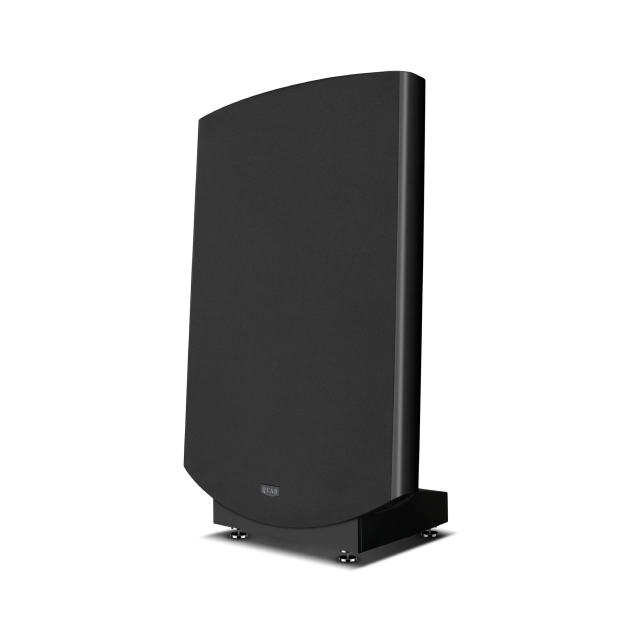
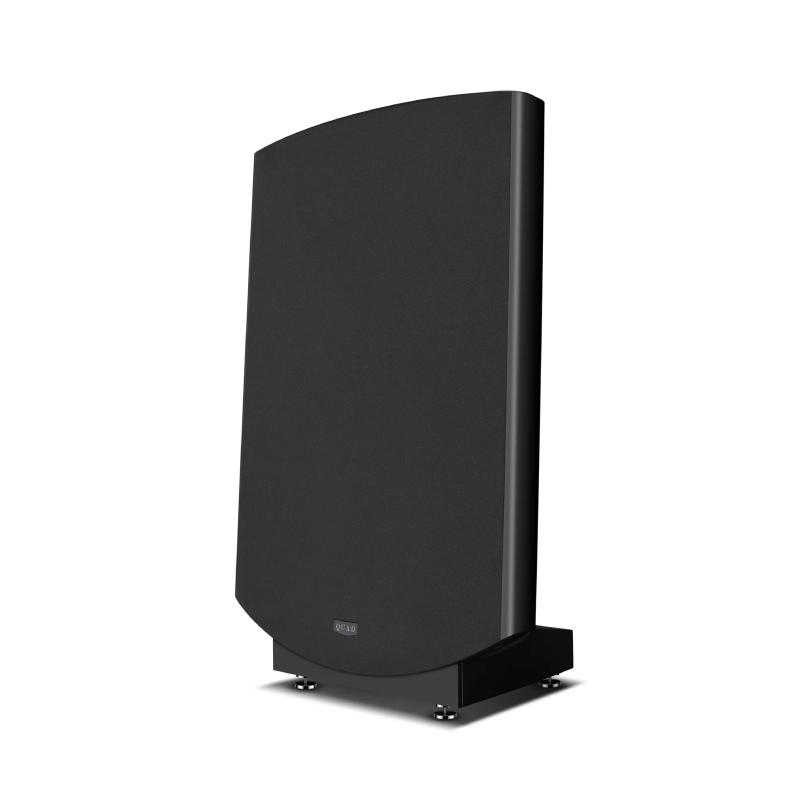
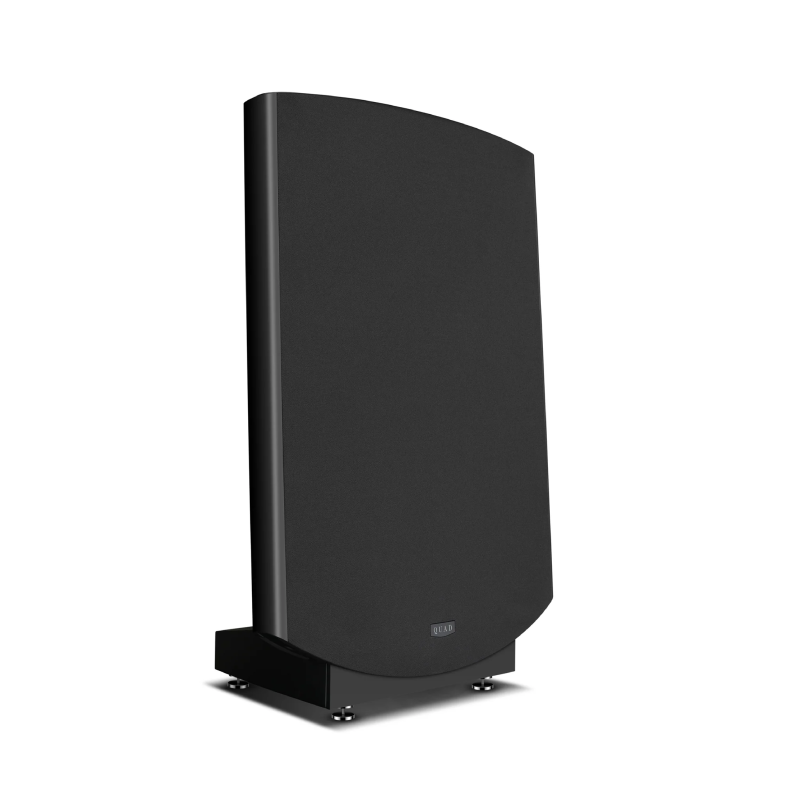
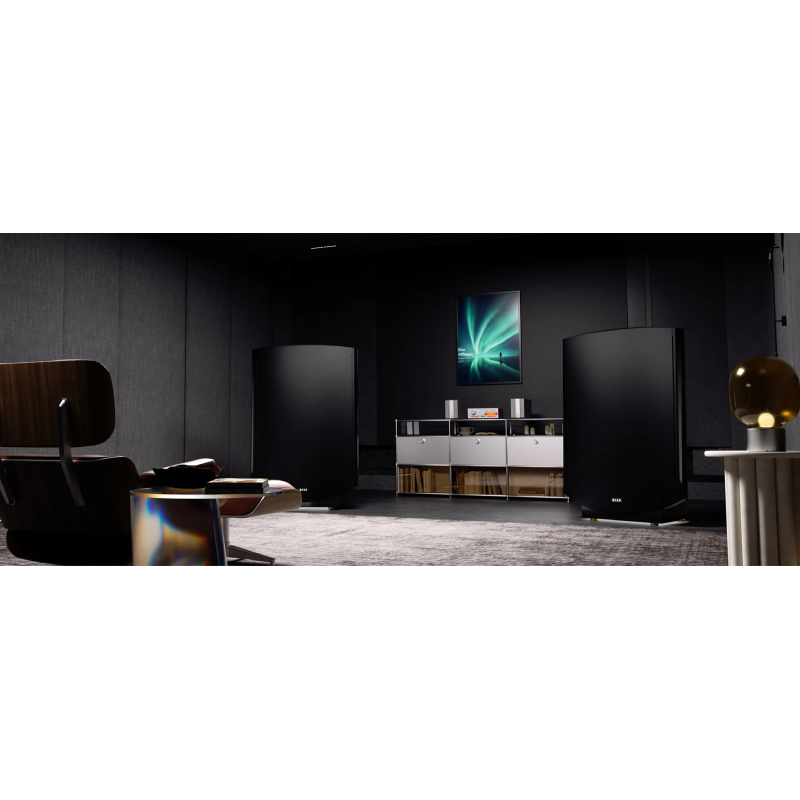
The founder of QUAD, Peter Walker, was a true visionary who revolutionized the world of hi-fi loudspeakers in the 1950s with the introduction of the first electrostatic loudspeaker. The ESL-57, the world’s first full-range electrostatic loudspeaker, marked a radical departure from conventional cone speaker designs.
Launched on the domestic hi-fi market in 1957, this innovative system used a thin electrically charged membrane suspended between stators to achieve extremely low distortion and remarkable transparency. The ESL-57 challenged established ideas about hi-fi sound reproduction. Since then, QUAD has continuously refined Walker’s design, building a reputation as one of the most prestigious audio brands and as the origin of one of the greatest hi-fi innovations of all time.
The New Quad ESL X Range
The ESL X concept emerged following extensive research by QUAD’s R&D team and its director Paul McConville (recognized as the world’s leading authority in QUAD ESL engineering, with 40 years of experience). Every aspect of the original design has been thoroughly evaluated and meticulously refined.
QUAD did not need to completely redesign its established methods. However, these incremental improvements have resulted in a significant transformation of the 2912 and 2812 models, giving rise to what is now known as the ESL X range.
Quad ESL 2812 X: Technology
It is easy to understand electrostatic loudspeakers (ESL) without fully realizing how they differ from conventional speakers. It is important to state clearly that a QUAD ESL speaker is not an ordinary speaker. Unlike traditional designs using moving-coil drivers, the ESL operates on a completely different principle: an electrostatic panel.
At the core of a QUAD ESL speaker are cells containing an ultra-thin Mylar diaphragm, ten times thinner than a human hair. This Mylar film is coated with a high-resistance conductive material and suspended between two perforated metal plates called stators.
QUAD’s ESL mid-high panels feature concentric ring electrodes, a design originally developed for the revolutionary ESL-63. Instead of allowing uniform movement of the entire diaphragm, the speaker is precisely engineered so that the audio signal appears to originate from a single point in space. This point-source characteristic is optimized by an innovative delay-line system, which feeds the outer stator rings with progressively delayed versions of the audio signal.
The Mylar membrane is charged with a constant high voltage exceeding 5.2 kV DC. An audio signal is applied to the stators to create an alternating electric field, causing the charged membrane to move back and forth. The diaphragm vibrates precisely in response to the musical signal, producing the exceptional purity for which QUAD ESL speakers are renowned.
For the ESL X, QUAD uses audio transformers manufactured in the United Kingdom. These transformers are custom-designed with meticulous precision and undergo strict quality control by QUAD’s service team led by Rob Flain. They are specifically designed to improve signal dynamics, particularly in the midrange and treble, resulting in significantly greater detail and exceptional linearity.
The wide bandwidth ensures a flat response extending beyond 18 kHz, creating a sense of air and natural extension. Thanks to robust regulation, these transformers effectively eliminate flux modulation artifacts at high sound pressure levels. A key factor in ESL performance is its very high operating voltage, around 5,250 volts, which greatly improves diaphragm control and linearity while significantly reducing distortion.
Quad ESL 2812 X: Implementation
The base of the speaker includes a stand housing the electronics and crossover. At the rear, there is a speaker terminal compatible with banana plugs or spades, along with an IEC C13 power input and a potentiometer to adjust the brightness of the “QUAD” logo.
The ESL 2812 X is supplied with highly effective decoupling spikes (and cups) as well as pads for delicate floors.
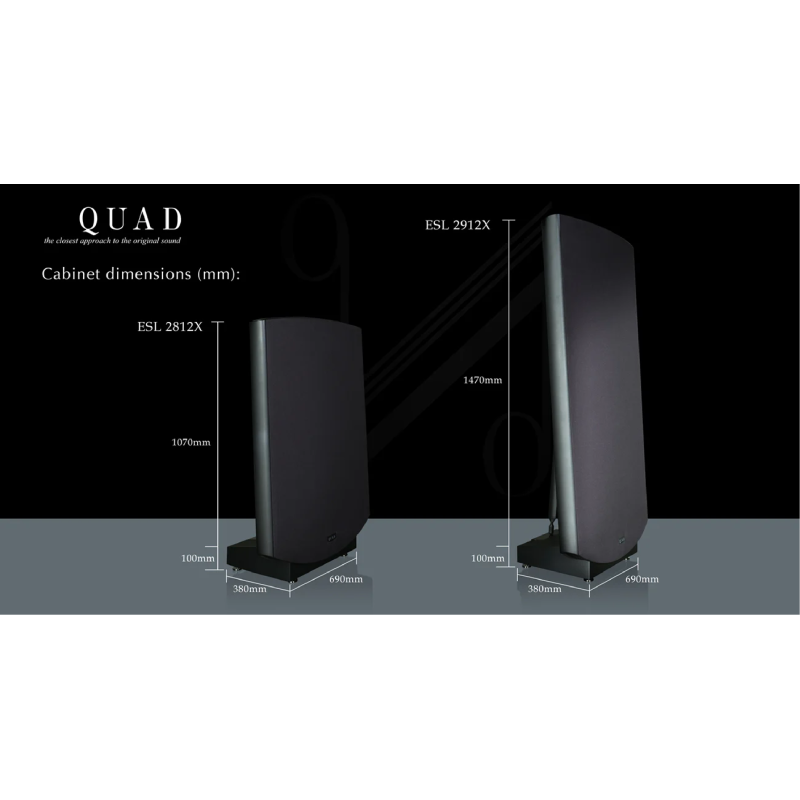
The ESL 2812 X is built using four electrostatic panels, sharing the same tweeter and midrange design as the flagship ESL 2912 X. However, it comes in a more compact, lighter, and less imposing format, with a height of just 1,070 mm.
Quad ESL 2812 X: Sound Performance
The ESL 2812 X is the most compact model in the range, yet it fully delivers the QUAD sound signature. It offers exceptional transparency and remarkable precision combined with striking naturalness. The midrange is so realistic that voices and acoustic instruments seem to originate directly from the room.
Thanks to its incredibly lightweight diaphragm, the 2812 X responds to transients with outstanding speed and precision. The stereo image is also exceptional, with instruments and voices appearing to float in space with a holographic effect.
The bass is impressive in both scale and control. The midrange benefits from exceptional clarity and extremely low distortion, while the treble stands out for its precision and smoothness. The frequency response is remarkable, especially in the bass, for a panel without a dynamic subwoofer: 37 Hz – 21 kHz (-6 dB).
The 2812 X can be considered as “boosted ESL-57s.” They retain the transparent, open, and airy sound of the ESL-57, but with significantly greater presence, higher detail resolution, and deeper bass. The stereo soundstage is on another level, with less directivity and a much wider optimal listening area.
Highly recommended +++
FranckModel: ESL 2812X
Configuration: Floor-standing dipole with a fixed 3° tilt
Type: Multiple electrostatic drivers
Panel elements: 4
Waveguide: Progressive concentric rings
Chassis structure: High-strength aluminium/steel composite
Maximum sound pressure level: 2 N/m² at 2 m on-axis
Sensitivity: 86 dB/2.83 V RMS
Nominal impedance: 8 ohms
Impedance range: 4 to 15 ohms
Maximum input voltage: Continuous input voltage (RMS): 10 V
Programme peak voltage for undistorted output: 40 V
Maximum peak input voltage: 55 V
Frequency response: 37 Hz – 21 kHz (-6 dB)
Bandwidth: 33 Hz – 23 kHz
Distortion above 1000 Hz: < 0.15%
Distortion above 100 Hz: < 0.5%
Distortion above 50 Hz: < 1.0%
AC input: 220–240 V, 100–120 V
Power fuse: 100 mA surge protection, 200–240 V
Power consumption: 8 W
Dimensions (H x W x D): 1070 x 690 x 380 mm
Net weight: 35 kg