




Exclusive interview with Lorenzo Vale, Experience Manager at Bose Luxury (Sonus faber & McIntosh)
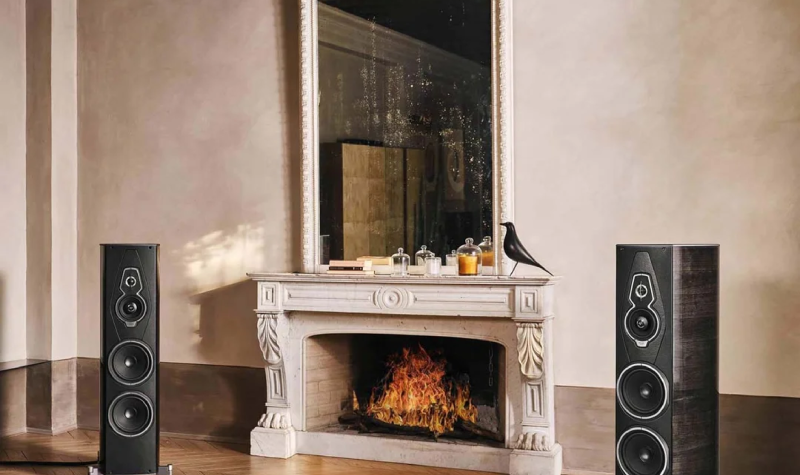
Some brands are recognisable before you have plugged in a single cable. Sonus faber is one of them. Since 1983 and the founding vision of Franco Serblin in Arcuola, in the Veneto region, the Italian house has established a self-evident truth: loudspeakers can be living sculptures, as beautiful to look at as they are breathtaking to hear. We sat down with the Experience Manager of Bose Luxury, responsible for the Sonus faber and McIntosh brands, to understand what makes this exceptional house tick.
1983: the birth of a philosophy
It all begins in Arcuola, a small town in the Veneto, when Franco Serblin, trained luthier and lifelong music lover, decides to design loudspeakers according to the same principles as classical instrument making: natural materials, an artisanal spirit, and an obsession with tonal accuracy. The brand takes its name from Latin: sonus (sound) and faber (the craftsman, the one who shapes).
Ownership has evolved since then, the brand now belongs to Bose Corporation, but Lorenzo Vale is keen to stress the continuity of spirit:
“Being part of the world’s first company entirely dedicated to audio is the best scenario we could have imagined. It is a true permanent home for the brand.”
A change in ownership that has not altered the essentials: loudspeakers continue to be assembled by hand in Italy, with the same precious woods, the same lacquers, the same exacting standards.

Sonus Faber timeline: key milestones
| 1983 | Founded by Franco Serblin in Arcuola (Veneto) · birth of the Natural Sound philosophy |
| 1992 | Launch of the Extrema, a reference loudspeaker that gains international press recognition |
| 2001 | Launch of the Amati Homage range, inspired by Stradivari violins |
| 2007 | Integration into the Absolute Sounds group, then D&M Holdings |
| 2015 | Acquisition by Bose Corporation · continuity of made-in-Italy production guaranteed |
| 2022 | Launch of the Suprema, flagship loudspeaker featuring the Camelia driver |
| 2024-25 | New wireless collection · Amati Supreme · pursuit of new unique listening experiences |
Craftsmanship as a radical choice, not a constraint
Hand manufacturing in Italy raises a legitimate question: in a market dominated by automation and economies of scale, is it genuinely viable? Sonus faber’s answer is unequivocal:
“Our woodworking and painting techniques are several centuries old. This often raises questions: why keep such processes? Is it not a bottleneck for production? Our answer is simple: quality over quantity.”
The founding inspiration comes from Cremona, the cradle of European lutherie, the city of Stradivari and Guarneri. It is here that the conviction was formed: wood, worked with patience and skill, is the finest material for reproducing natural sound, whether for a violin or a loudspeaker cabinet.
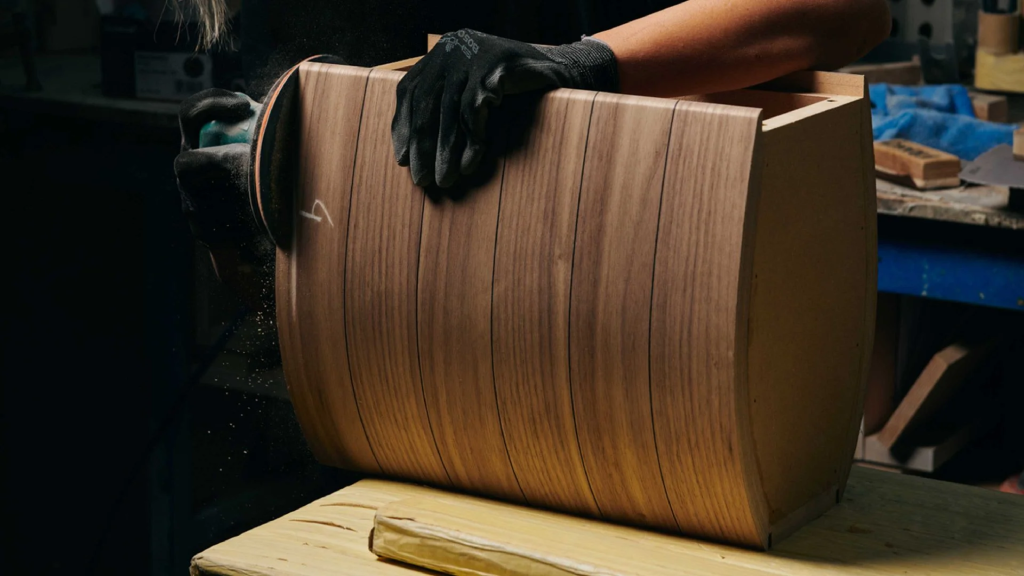
Every Sonus faber loudspeaker is the result of a chain of manual gestures: selecting the wood species (walnut, maple, ash depending on the range), bending the side panels, applying coats of lacquer or leather, assembling the acoustic components. A lengthy process, never exactly reproducible from one unit to the next, which makes each loudspeaker, in a sense, an original.
“Natural Sound”: a philosophy, not a marketing tagline
The Natural Sound concept at Sonus faber is not an advertising hook. It is a design discipline that runs through every decision, material choices, cabinet geometry, crossover configurations, driver placement.
The objective is simple to state, difficult to achieve: that the voice of a soprano, the body of a cello, the crack of a snare drum sound as they do in real life. Not beautified, not softened, not amplified, just true.
What music lovers feel when listening, the brand captures with two recurring pieces of customer feedback:
“I had never heard that voice like that before” and “Can you turn it up?”
The second comment may be the most telling. A loudspeaker that makes you want to hear more, that never fatigues, that never bores, this is precisely the antithesis of anxiety-inducing hi-fi, the kind that pushes you to analyse rather than to listen.
The Sonus faber “voice” is built on the treatment of high and mid frequencies: this is where the brand’s identity resides, in the way it shapes vocal presence and the texture of acoustic instruments, with perfect coherence between electroacoustics, design and musical understanding.
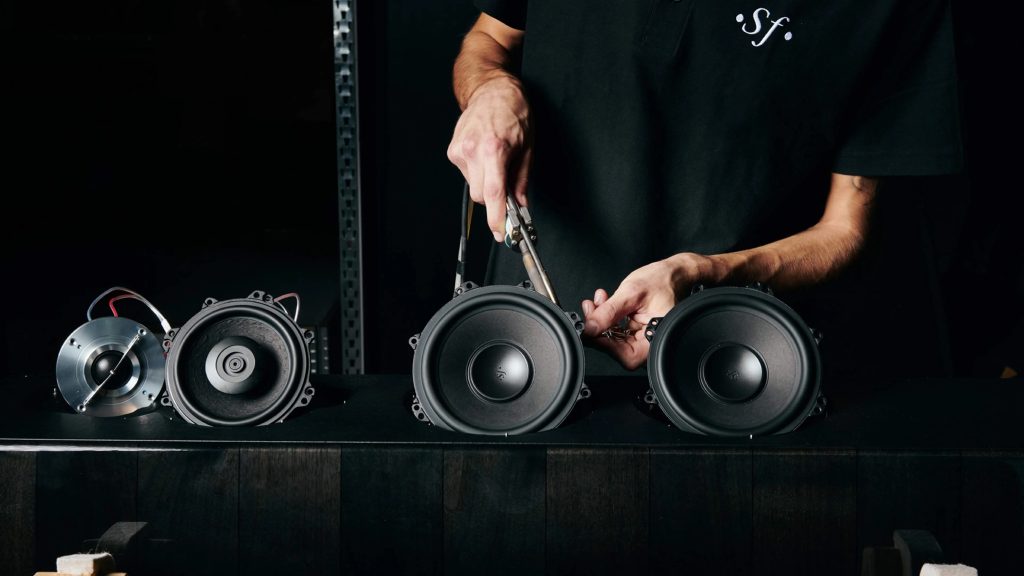
The Sonus faber range: from the accessible to the exceptional
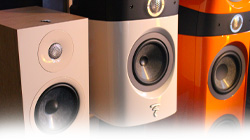
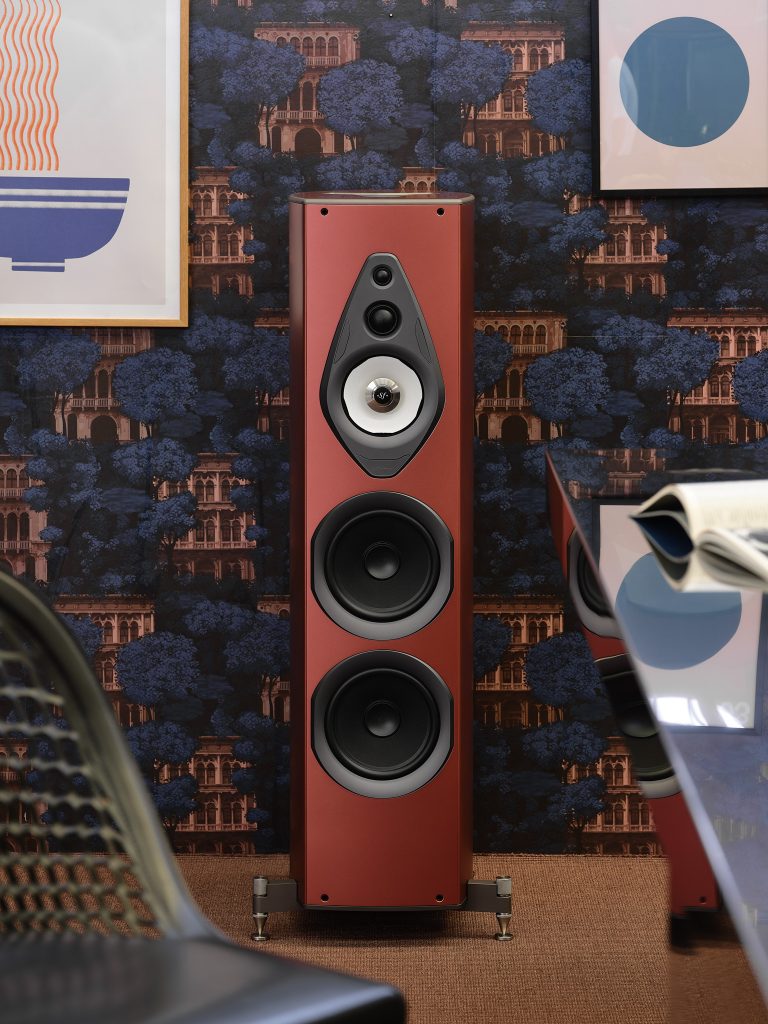
Sonus faber offers several loudspeaker families, from entry-level compact speakers to flagship floorstanders. Each line shares the house’s aesthetic and sonic DNA, but is designed for different configurations and budgets.
| Family | Positioning | Key features | Flagship model |
|---|---|---|---|
| Lumina | Entry level | Compact speakers and floorstanders · wood finishes | Lumina I / III |
| Sonetto | Mid-range | Solid wood · Arrow Point driver | Sonetto V / VIII |
| Olympica Nova | High-end | Leather · DAD (Dynamic Absorption Device) | Olympica Nova III / V |
| Amati | Excellence | Maple wood · historic Stradivari signature | Amati Supreme |
| Suprema | Absolute reference | Camelia driver · limited edition | Suprema |
| Wireless | Connected collection | Integrated streaming · Sonus faber design | Omnia / Duetto |
The product that best embodies the brand’s DNA today? The Amati Supreme, according to Lorenzo Vale:
“If I had to choose one, the Amati Supreme represents the ultimate expression of our vision: a perfect balance between tradition and innovation.”
Two innovations that redefine what is possible
The Camelia driver: a geometry inspired by nature
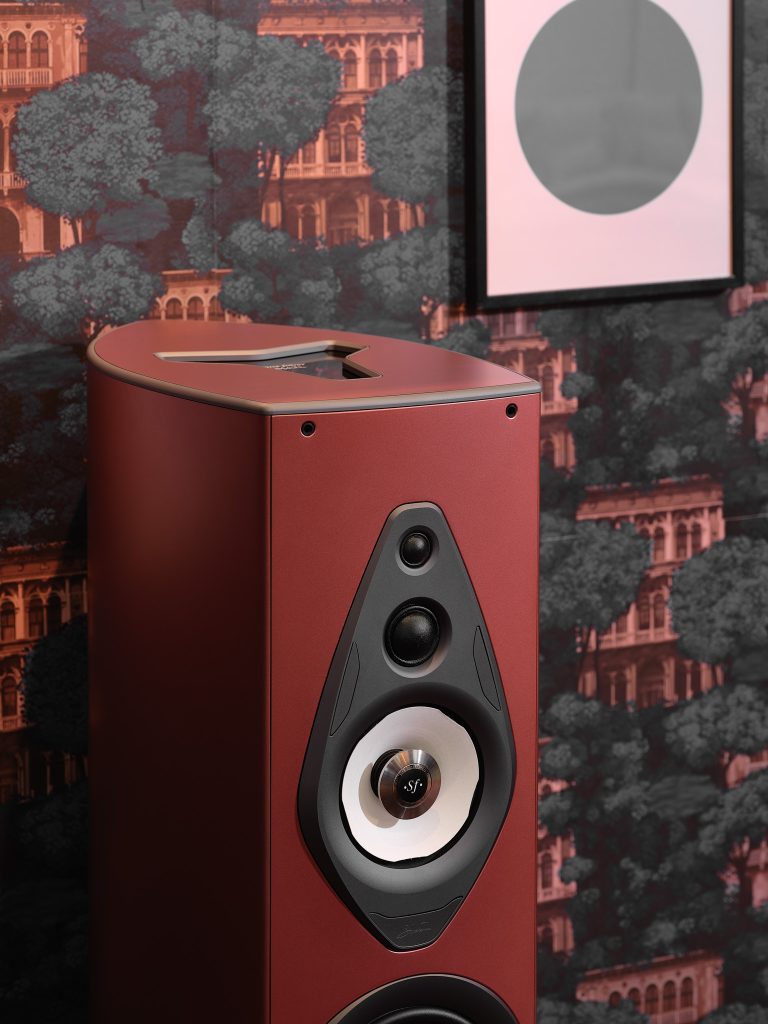
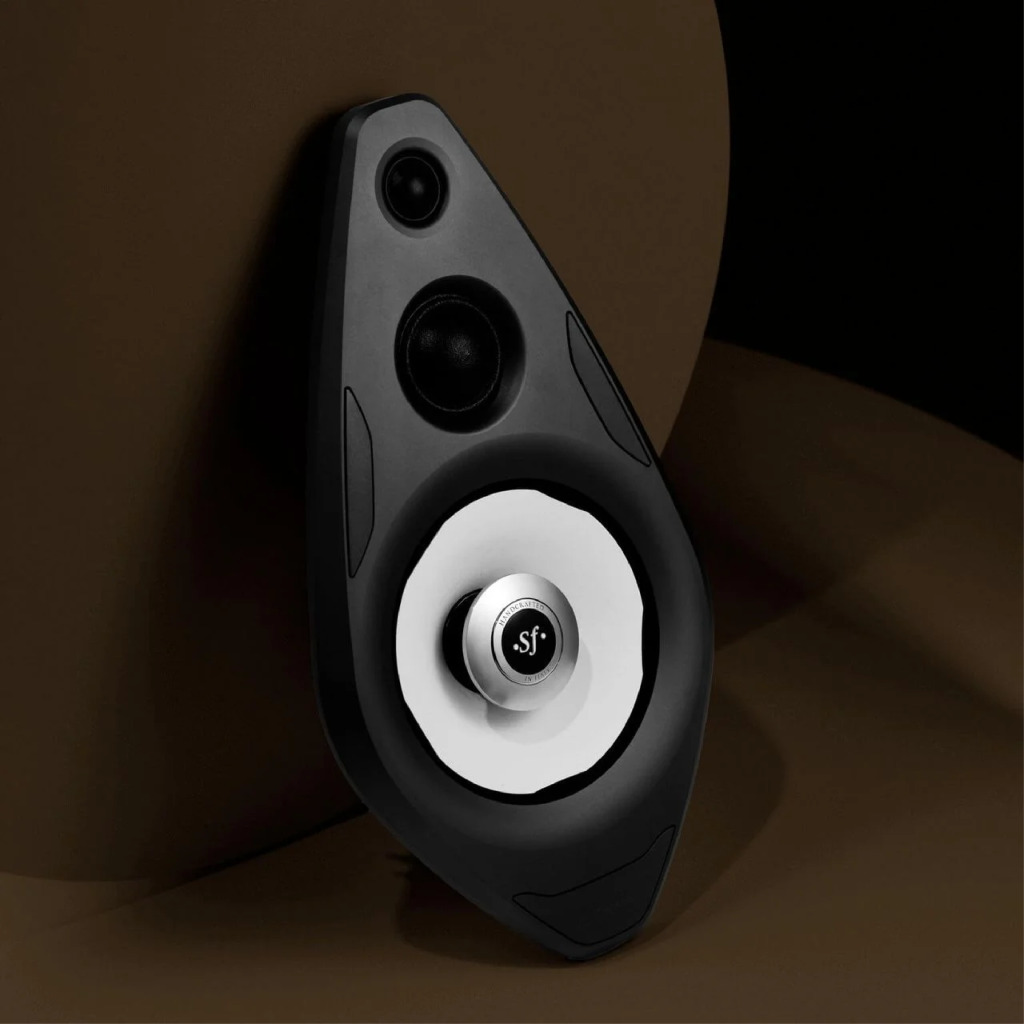
Initially developed for the flagship Suprema, the Camelia midrange driver is one of the brand’s most remarkable innovations in recent years. Its diaphragm is inspired by the camellia flower, a five-petal geometry that is not decorative, but functional:
“Its five-petal geometry reduces the resonances typical of circular shapes and reinforces our Natural Sound signature. The diaphragm is left unpainted to guarantee maximum sonic purity.”
The organic basket (the frame supporting the diaphragm) and the absence of surface treatment on the diaphragm itself are deliberately unconventional choices, in an industry where everything is painted and treated, Sonus faber trusts the raw material.
Cork: an ancient material serving modern acoustics
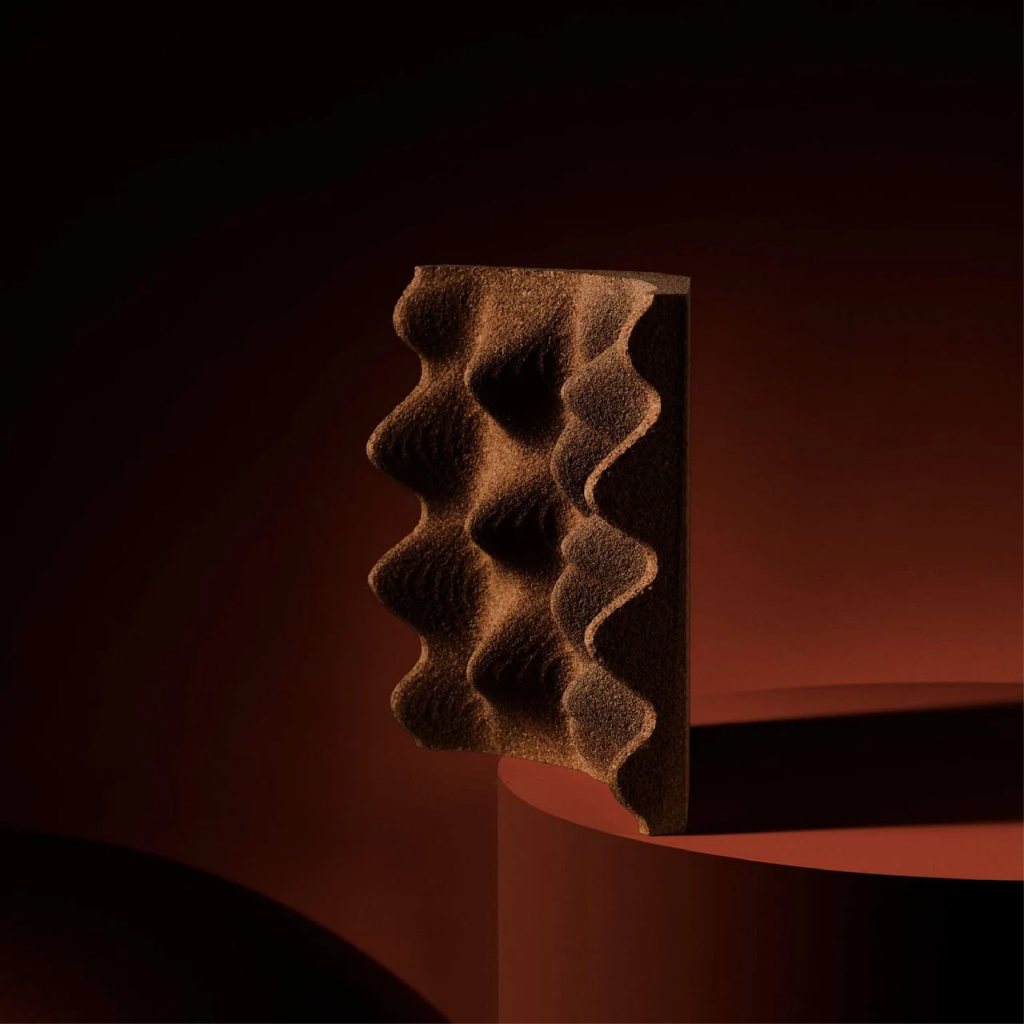
The second major innovation is the integration of cork into the acoustic design of the loudspeakers. Light, natural, with exceptional damping properties, cork is used to control internal resonances within the cabinets, where other manufacturers turn to synthetic foam or bitumen.
“A sustainable, lightweight material with exceptional acoustic properties. We truly love what this material has allowed us to achieve.”
The use of cork also fits into a sustainability approach, an increasingly important consideration in the choices of environmentally conscious audiophiles.
Streaming, AI and wireless: modernity without compromise
Sonus faber does not ignore the evolution of listening habits. The wireless collection, including the Omnia and the Duetto, responds to the growing demand for seamless connectivity without sacrificing sound quality. Delivering excellent sound while offering fluid connectivity is a genuine challenge, but the priority remains staying true to founding values while pushing innovation forward.
On the question of artificial intelligence and DSP (digital signal processing), the position is clear and consistent with the brand’s DNA:
“We deliberately avoid overloading our products with DSP and excessive digital processing. Natural materials for a natural sound, that has been our guiding principle since 1983.”
On AI-generated music, the response is open but clear-eyed: neither fear nor uncritical enthusiasm. The real challenge remains emotion. What a brand like Sonus faber must focus on is delivering the most emotional experience possible, technology serves feeling, never the other way around.
For the next five years, the brand sees genuine opportunity in hi-fi to broaden its audience, provided it does not turn inward:
“The more technical and elitist we become, the less we contribute to preserving the magic of musical listening.”
Frequently asked questions about Sonus faber
Are Sonus faber loudspeakers still handmade in Italy?
Yes, entirely. All manufacturing remains in Italy, using woodworking and finishing techniques inherited from centuries of lutherie tradition. This is a deliberate choice: quality over quantity. Since the acquisition by Bose Corporation in 2015, the continuity of made-in-Italy production is guaranteed.
What is Sonus faber’s “Natural Sound” philosophy?
Natural Sound is the founding philosophy that has guided every design decision at Sonus faber since 1983: using natural materials (wood, leather, cork) and electroacoustic choices aimed at reproducing the sound of instruments and voices as faithfully and vividly as possible, without artificial coloration or excessive digital processing.
Which Sonus faber loudspeaker should a beginner choose?
The Lumina range is the ideal entry point: it delivers the brand’s aesthetic and sonic DNA in a compact format at an accessible price. The Lumina I is especially recommended for smaller rooms; the Lumina III suits larger spaces.
Is the Amati Supreme accessible to a non-professional audiophile?
The Amati Supreme targets the high-end segment and requires quality amplification to reveal its full potential. It represents the most accomplished expression of Sonus faber craftsmanship outside of the flagship Suprema. Pairing it with McIntosh electronics (same Bose Luxury group) is particularly synergistic.
What is the Sonus faber Camelia driver?
The Camelia is a midrange driver developed for the Suprema, whose diaphragm is inspired by the camellia flower. Its five-petal geometry reduces circular resonances and its unpainted diaphragm guarantees maximum purity. It is also featured in the Amati Supreme.
Does Sonus faber offer wireless and connected loudspeakers?
Yes. The wireless collection includes two products (the Omnia and the Duetto) that integrate streaming and connectivity without compromising the brand’s sonic signature, supported by Bose Corporation’s technology expertise.
What amplification should be paired with Sonus faber loudspeakers?
Sonus faber recommends warm, musical amplification — preferably high-quality solid-state electronics or tube amplifiers for the upper ranges. Pairings with McIntosh amplifiers (same Bose Luxury group) are particularly synergistic and consistent with the brand’s sonic philosophy.
Some brands make you want to listen to music. Sonus faber is one of them and this conversation confirms it. Behind the finishes that turn heads in listening rooms, there is a deep sonic conviction, consistent since 1983: the most beautiful sound is the one that most closely resembles live sound.
The Natural Sound philosophy is not an aesthetic stance. It is a rigorous technical discipline, carried forward by craftsmen who work wood the way a bowmaker shapes an arch, and by engineers who refuse to paper over imperfections with a layer of DSP.
What stays with us most: a brand that does not take itself too seriously, that can laugh at elitist hi-fi and reminds us that all of this, at its heart, exists to help us hear music better. “And perhaps to stop playing the same four demo albums on repeat.”
Discover the entire Sonus faber range at maPlatine.com or listen to it by making an appointment at our auditorium in Rennes.