






Direct answer
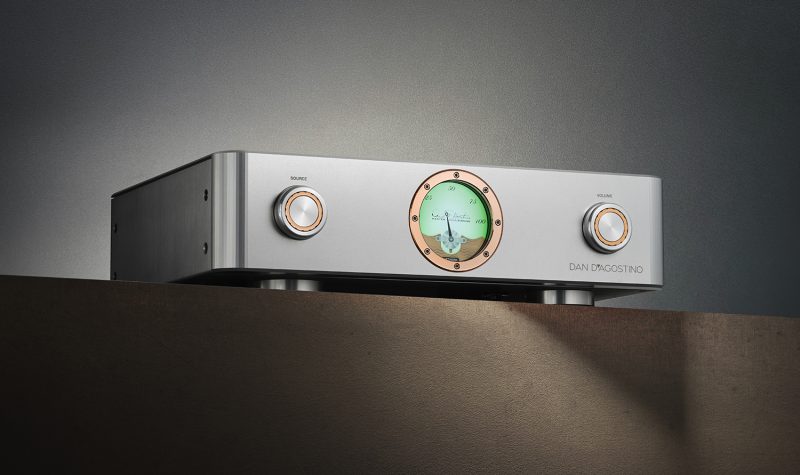
The Dan D’Agostino Pendulum is the most accessible integrated amplifier from the American manufacturer, available at maPlatine.com for 19,990 euros. Its input stage uses a JFET circuit topology derived from the Momentum C2 preamplifier, powered by a 750VA toroidal transformer and nearly 25,000 microfarads of filtering. It offers three balanced XLR stereo inputs, one XLR preamplifier output, one single-ended input dedicated to a turntable and a 6.35mm stereo headphone output. Two optional boards complete the amplifier: a moving-coil phono card at 1,290 euros and a digital board with optical, RJ45, Wi-Fi and HDMI eARC connectivity at 3,290 euros. On listening, it stands out for its harmonic density, its speed on transients and its authority in the bass. Available to audition by appointment at the maPlatine.com auditorium in Rennes.
Founder of Krell in 1980 and its chief engineer until 2009, Dan D’Agostino set up his own company in 2011. The components that carry his name are built by hand in Arizona and rank among the most desirable on the market. The full range is gathered on the brand page.
The Pendulum is the most democratic model in the house, yet it retains the sonic DNA. The Dan D’Agostino Pendulum integrated amplifier has just arrived in our catalogue, along with its two optional boards. It joins our selection of integrated amplifiers.
What does the Pendulum integrated amplifier offer?
A JFET architecture and an oversized power supply
At the heart of the Pendulum sits a redesigned JFET input circuit topology, derived from the celebrated Momentum C2 preamplifier. It improves the precision of the entire circuit and guarantees a remarkable performance for a unit of this size.
The power supply is built around a dedicated 750VA toroidal transformer combined with nearly 25,000 microfarads of filtering. That energy reserve delivers stable performance, minimises distortion and allows the amplifier to fully exploit the potential of even the most demanding loudspeakers. Our amplifier buying guide covers the basics.
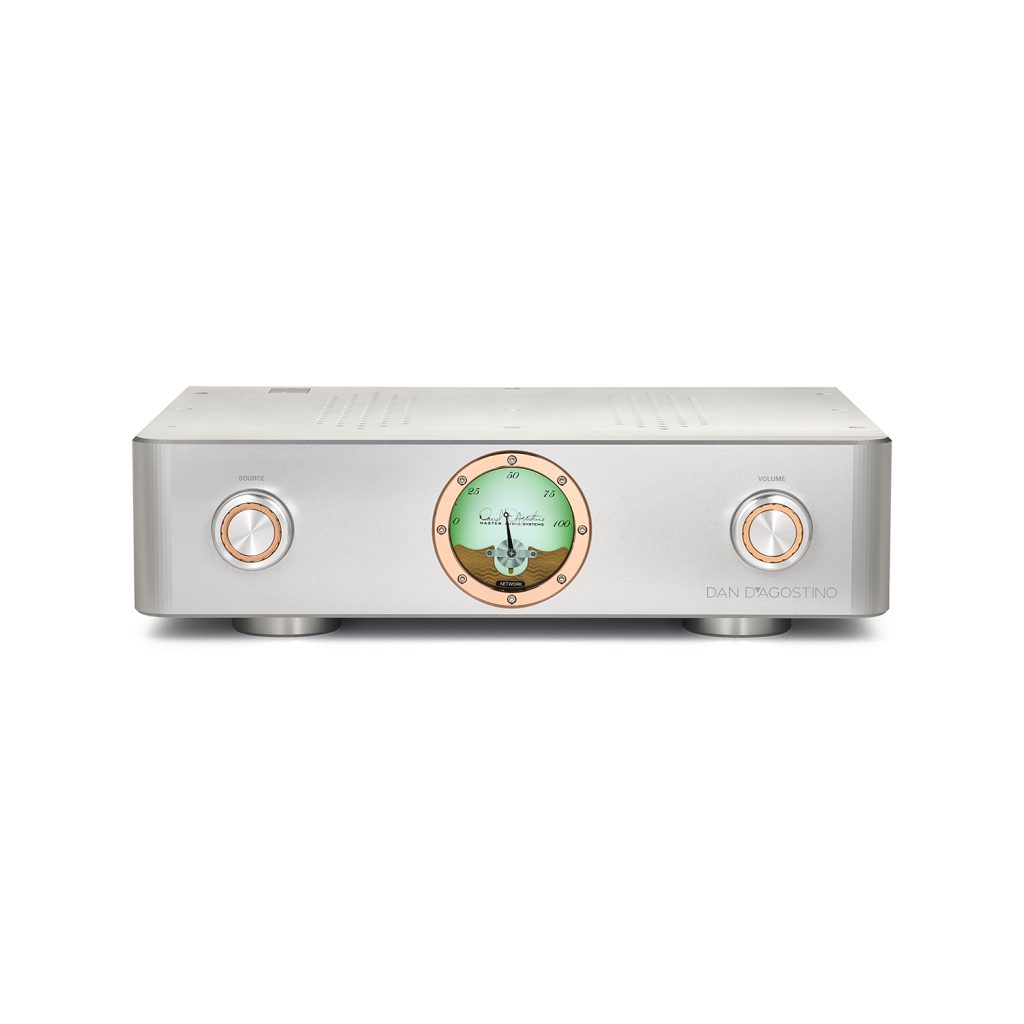
On the front panel, an LCD display inspired by Swiss watchmaking shows the status of the unit, its functions and its metadata in real time. Brightness is adjustable and a dark mode switches off the volume display after ten seconds. The left-hand rotary control handles power and menu navigation, the right-hand one handles volume.
Connectivity built around balanced inputs
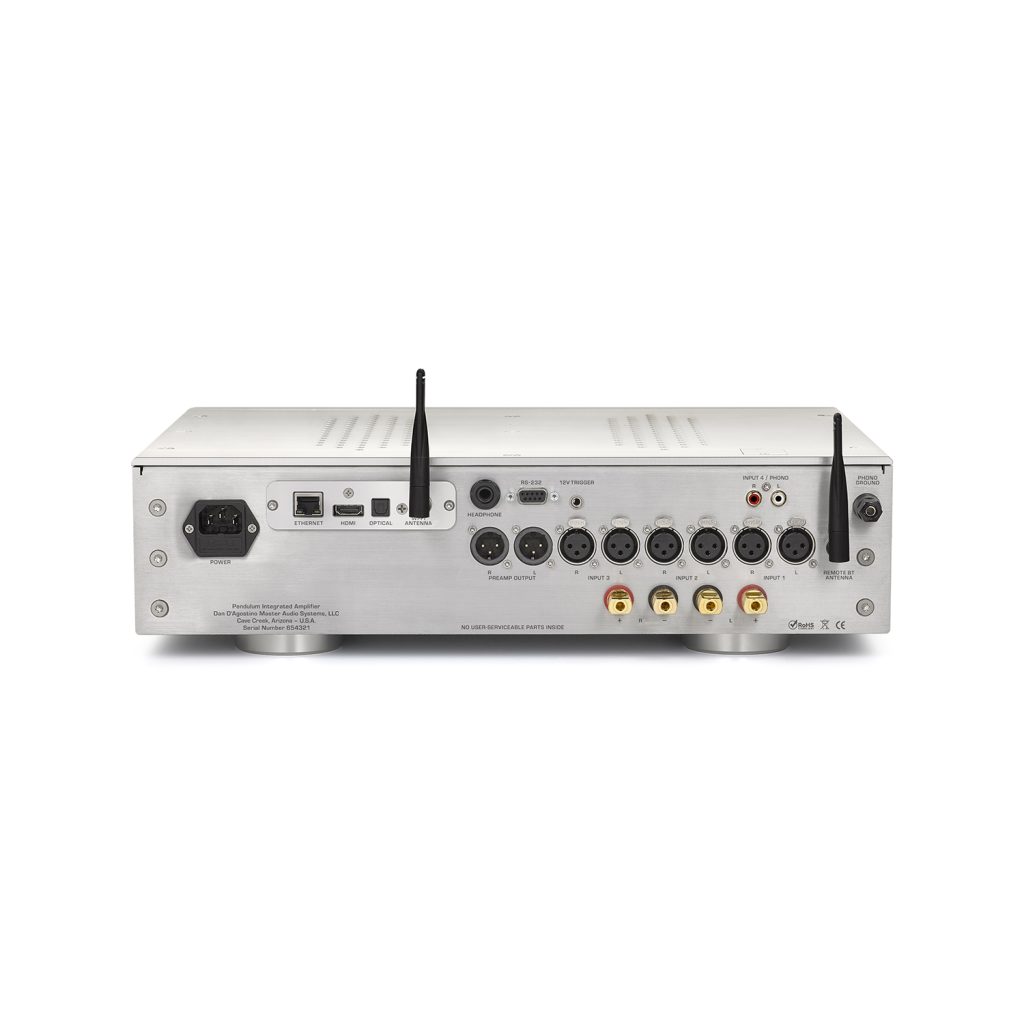
- 3 balanced XLR stereo inputs and 1 XLR preamplifier output, opening the way to a power amplifier or a subwoofer
- 1 single-ended input dedicated to a turntable, phono card optional
- 1 6.35mm stereo headphone output on the rear panel, compatible with our Hi-Fi headphones
- 1 Bluetooth antenna reserved for the remote control, not for music streaming
Two optional boards to cover every source
The digital board adds optical connections along with RJ45 and Wi-Fi ports. The Pendulum is also the first D’Agostino component to feature an HDMI eARC input, which simplifies integration with a television. See the Pendulum DAC board at 3,290 euros.
The moving-coil phono card allows the amplifier to be paired with a turntable fitted with a high-end cartridge. It offers several loading values through DIP switches accessible via a window on the top of the unit: 50, 100, 250, 500, 1000 ohms and 47 kohms. See the Pendulum phono card at 1,290 euros. Both are listed in our optional cards section.
The phono prerequisite
As soon as a vinyl source enters the chain, a phono preamplifier is mandatory. Without the optional card, the Pendulum turntable input cannot be used and an external phono preamplifier is required. A cartridge is never a preamplifier.
A DAC is not a phono preamplifier. The digital board converts a digital signal, the phono card handles the analogue signal from a cartridge. The two functions remain distinct and can coexist. Our phono preamplifiers page explains this link in the chain.
How does the Pendulum sound?
It does not try to impress through excessive demonstration. What strikes first is its finesse and its articulation. Harmonic density is generous, dynamics are superb, and few transistor amplifiers offer such speed on transients. As with Krell electronics in their day, you find remarkable authority and control in the bass.
It passes a great deal of information without ever becoming clinical, draws a very wide, stable and precise soundstage, and reproduces voices with a presence worthy of the best tube electronics. On classical repertoire the stage becomes completely holographic.
| Reference | Role | Price at maPlatine.com |
|---|---|---|
| Pendulum integrated amplifier | Preamplification and power, XLR inputs, headphone output | 19,990 € |
| Pendulum phono card | Essential to connect a turntable with an MC cartridge | 1,290 € |
| Pendulum DAC board | Optical, RJ45, Wi-Fi and HDMI eARC | 3,290 € |
Key takeaways about the Pendulum
The Pendulum works on its own, and both boards can also be fitted later: the phono card determines vinyl use, the digital board network and television use. Fitted with both, it covers every source in a fully developed system.
Which products should be paired with the Pendulum?
Our experts have built a complete system around the Pendulum, auditioned at the Rennes auditorium. Each link answers a specific characteristic of the amplifier.
Loudspeakers: Revival Audio Atalante 5
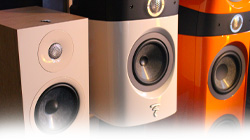
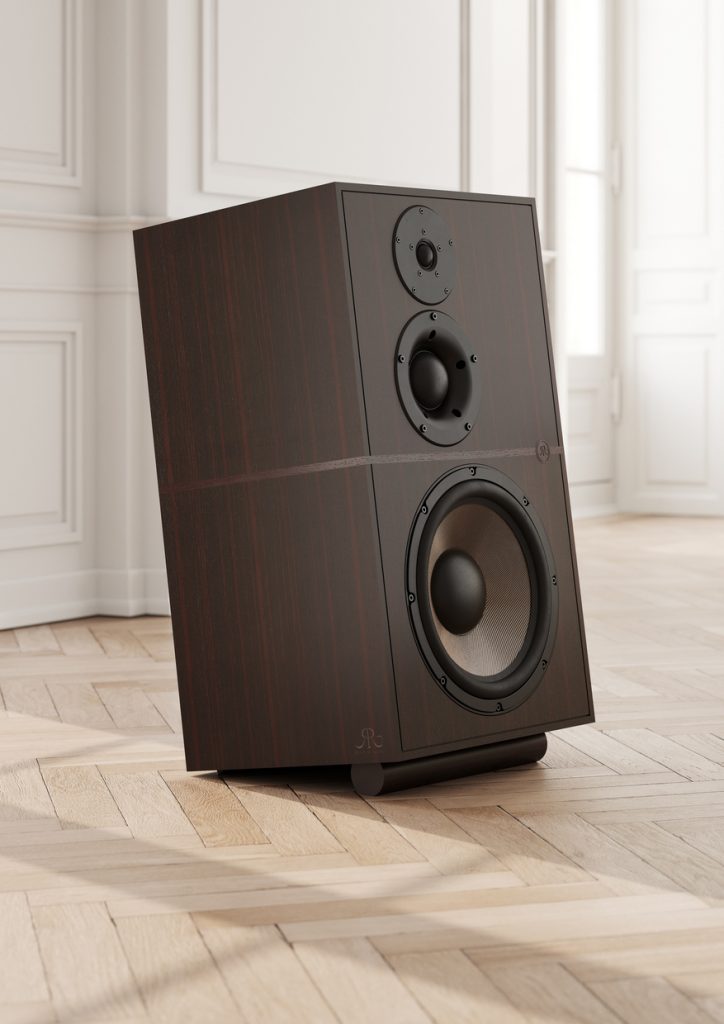
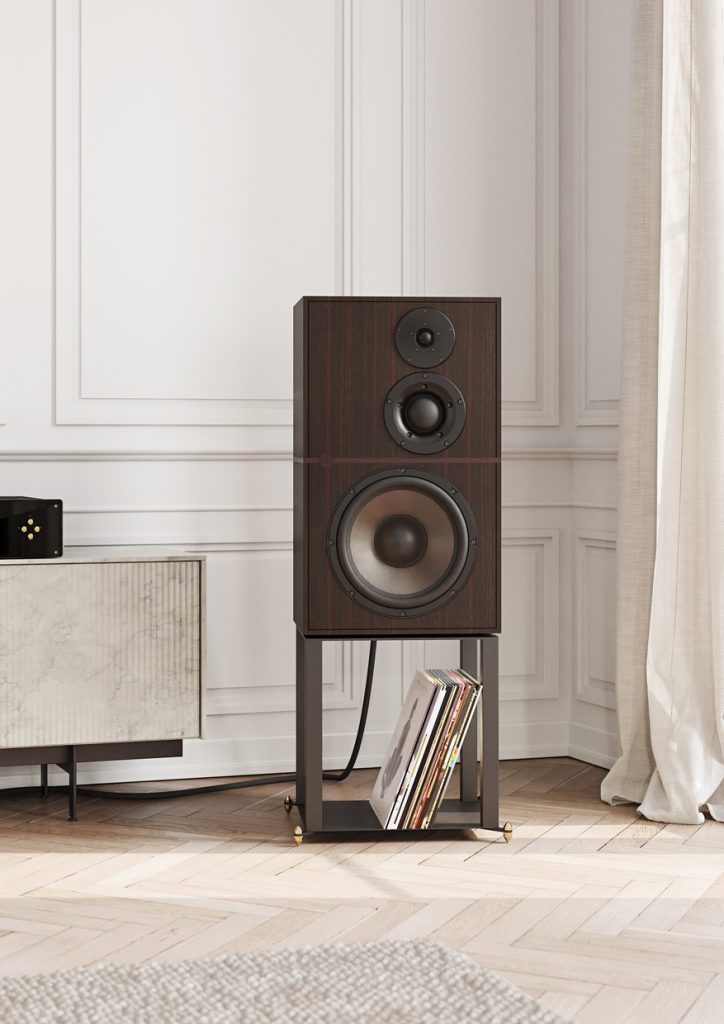
The Revival Audio Atalante 5 at 5,179 euros are three-way loudspeakers whose bass is handled by a 30cm driver with a BSC cone (Basalt Sandwich Construction). Its light and rigid construction gives a fast and fluid transient response with deep, dynamic and tight bass: exactly what the 750VA of the Pendulum are able to sustain.
The 75mm soft-dome midrange and the 28mm tweeter with ARID technology add presence and energy to voices, extending the vocal realism of the amplifier. The single-wiring terminals accept banana plugs or spade connectors. We recommend placing them on 40cm stands. See also our guide on how to choose your Hi-Fi speakers and our full Hi-Fi loudspeakers selection.
Vinyl: Acoustic Signature Hurricane Neo and TA-2000 Neo tonearm
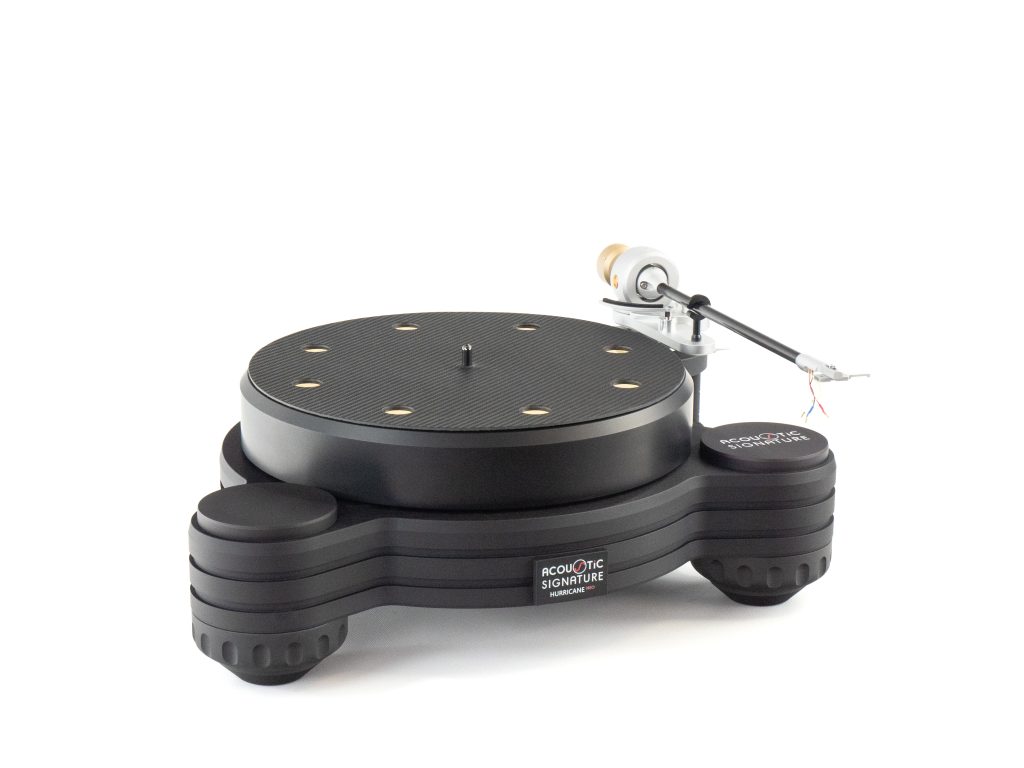
The Acoustic Signature Hurricane Neo turntable at 10,389 euros is the second model in the German manufacturer’s tripod line. Solid aluminium plinth 50mm thick, 11kg platter fitted with 8 Silencer modules, Dura Turn Diamond bearing with a 15-year warranty, twin AC motors driven by the external DMC-20 power supply with automatic vibration control. More than 30kg of neutrality that leaves no sonic signature of its own. The full range is on the Acoustic Signature brand page, and our manual turntables section lists the rest.
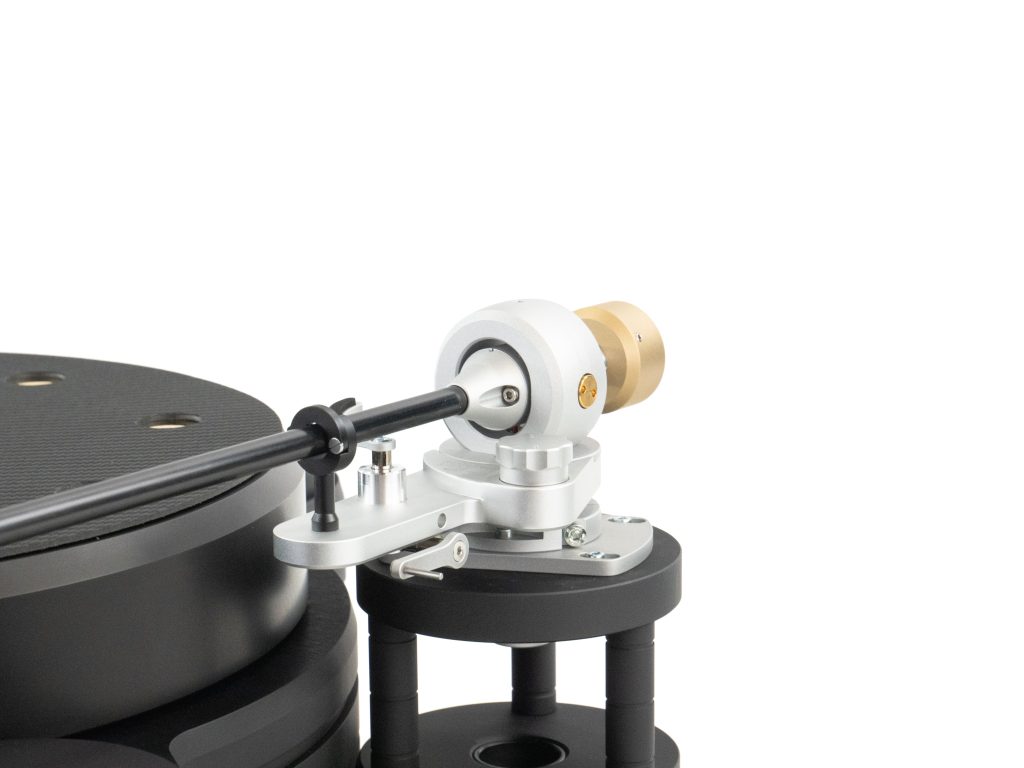
The TA-2000 Neo tonearm brings a dual carbon armtube, SKF ball bearings and a brass counterweight. One decisive detail here: it is supplied with an AudioQuest 5-pin DIN to RCA cable, which connects directly to the single-ended turntable input of the Pendulum, with no adapter. Effective mass is 9.6g in the 9-inch version and 12.6g in the 12-inch version, and our preference goes to the 12-inch. Other arms are listed under tonearms and accessories.
Since Acoustic Signature covers the whole analogue chain, we stay within the brand for the cartridge: the MCX-4 at 2,689 euros, or the MCX-3 at 1,549 euros for a tighter budget. Both are moving-coil designs, squarely within the remit of the Pendulum phono card. See our low output MC cartridges and our guide on how to choose a turntable.
Network: Eversolo T10 network drive
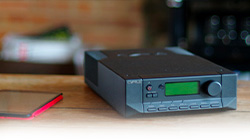
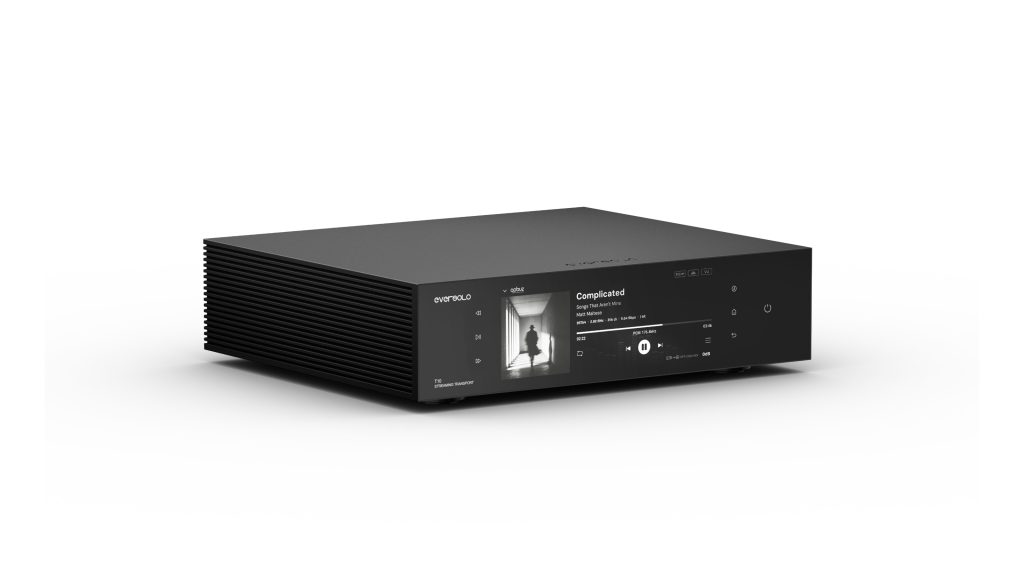
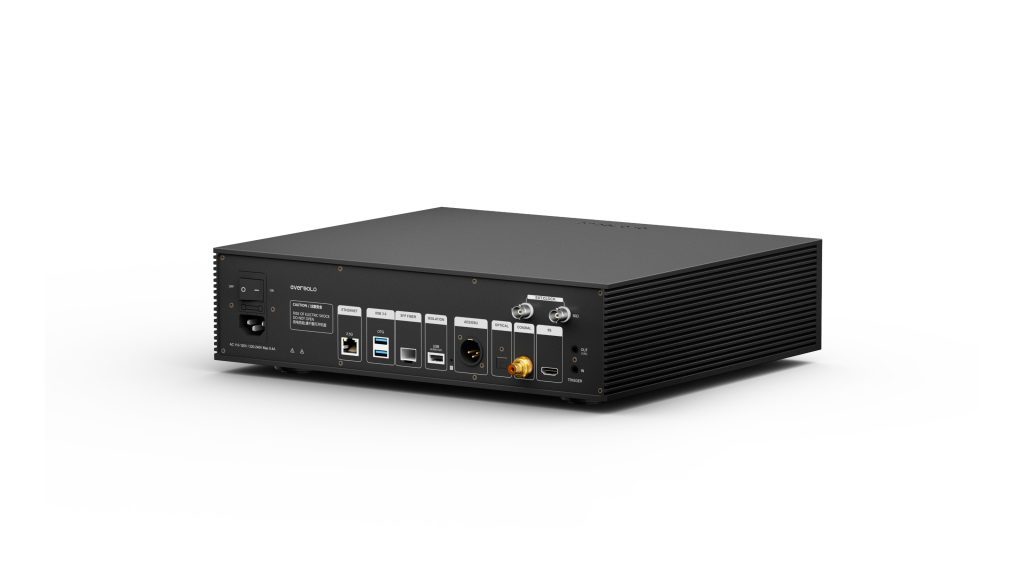
The Eversolo T10 network drive at 2,189 euros is a pure drive: it concentrates on retrieving and transmitting the digital signal and delegates all conversion to an external converter. Its power supply is built around a toroidal transformer wound with 4N oxygen-free copper, an OCXO crystal oscillator with very low phase noise, seven digital outputs and an SFP fibre optic network port.
Cables and installation
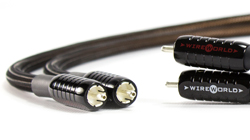
Three XLR inputs and one preamplifier output: the XLR interconnect cable is the most rewarding item in the cabling budget. A single pair of speaker cables is enough for the Atalante 5, and an optical cable links the T10 to the digital board. On the mains side, power cables and a filtered multi-socket deserve attention. For placement, see our guide on how to place your Hi-Fi devices, and consider a rigid Hi-Fi rack with cones and decoupling feet for a turntable of this weight.
| Link | Product | Price |
|---|---|---|
| Loudspeakers | Revival Audio Atalante 5 | 5,179 € |
| Turntable | Acoustic Signature Hurricane Neo | 10,389 € |
| Tonearm | Acoustic Signature TA-2000 Neo | see product page |
| Cartridge | Acoustic Signature MCX-4 | 2,689 € |
| Network source | Eversolo T10 | 2,189 € |
Key takeaways from these pairings
This system comes down to three choices and two checks. The Atalante 5 put the amplifier’s power reserve to work where it matters, on a 30cm bass driver, while extending its vocal realism. The Hurricane Neo paired with the TA-2000 Neo provides a neutral mechanical foundation that colours nothing, with an MC cartridge from the same brand matched through the loading switches of the phono card. The Eversolo T10 completes the set with the same logic: it transmits, it does not convert.
The two checks concern the boards. The phono card is mandatory to use the turntable input. And on the network side, Toslink optical is the only format common to the T10 and the digital board: without it, an external DAC connected in XLR is required. The rest of the budget goes to the balanced interconnect first, then to the mains, in that order.
FAQ : Everything you need to know before buying the Dan D’Agostino Pendulum
What is the Dan D’Agostino Pendulum?
It is the most democratic product from Dan D’Agostino Master Audio Systems: an integrated amplifier that brings preamplification and power together in a single compact chassis while retaining the brand’s sonic DNA, refined, fluid and extremely musical. It is available at maPlatine.com for 19,990 euros.
Can a turntable be connected to the Pendulum?
Yes, but the phono card is optional and it is essential: without it, the input dedicated to the turntable cannot be used and an external phono preamplifier is required. The module is designed for moving-coil cartridges and offers six loading positions through DIP switches accessible via a window on the top of the unit: 50, 100, 250, 500, 1000 ohms and 47 kohms. A reminder: a cartridge is never a preamplifier.
What is the difference between the Pendulum phono card and the DAC board?
They are two distinct functions. The phono card handles the very low-level analogue signal from a turntable cartridge, amplifying it and applying RIAA equalisation. The DAC board converts a digital signal coming from the network or a television. A DAC therefore never replaces a phono preamplifier. If you listen to both vinyl and streaming, both boards are required.
What does the optional digital board include?
It adds optical connections along with RJ45 and Wi-Fi ports. The Pendulum is also the first D’Agostino component to feature an HDMI input with eARC functionality, which simplifies integration with a television. It is available for 3,290 euros.
Does the Bluetooth antenna allow wireless music playback?
No. The Bluetooth antenna on the rear panel is used only for the remote control connection. For network playback, the optional digital board takes over, or an external source connected to one of the XLR inputs.
Is the Pendulum powerful enough for demanding loudspeakers?
It delivers comfortable output power in a compact format. Its 750VA toroidal transformer and its filtering of nearly 25,000 microfarads ensure stable performance and minimise distortion, allowing it to fully exploit the potential of even the most demanding loudspeakers, with remarkable authority and control in the bass.
Which loudspeakers should be paired with the Pendulum?
Our reference pairing is the Revival Audio Atalante 5, available at maPlatine.com for 5,179 euros. Its 30cm BSC bass driver, built around a basalt sandwich construction cone, delivers a fast and fluid transient response with deep, tight bass, which is exactly what the Pendulum power supply reserve is able to sustain. Its soft-dome midrange and tweeter add presence and energy to voices.
How do you connect an Eversolo T10 network drive to the Pendulum?
The T10 is a pure drive: it performs no analogue conversion. With the digital board installed, connect it through its Toslink optical output. Without that board, add an external DAC fed by the T10 in AES/EBU, coaxial, IIS or USB, the converter then being connected to one of the amplifier’s XLR inputs.
The Pendulum holds a place of its own in the Dan D’Agostino line-up. It is the most democratic product in the range, and yet nothing has been conceded on the fundamentals: the JFET topology inherited from the Momentum C2, the 750VA transformer, the filtering of nearly 25,000 microfarads. All of it in a single chassis, with an interface reduced to two rotary controls and a display you can make disappear.
On listening, it does not try to prove a point. It articulates, it holds the bass, it draws a wide and stable stage, and it reproduces voices with a naturalness usually associated with tube electronics. An amplifier that passes a great deal of information without ever turning hard, which is precisely the difficulty at this level of resolution.
It remains a starting point as much as an end point. Its two boards decide what it can do, and the components placed around it decide what you will actually hear. That is why we do not sell it on its own: the system built around the Atalante 5, the Hurricane Neo and the Eversolo T10 exists and can be auditioned.