






Audiophile subwoofer: the complete guide to enhancing your HiFi system in 2026
Article published February 2026
You hit play on your favourite track: the double bass lays down its opening notes, the kick drum pulses gently, synthesisers rumble in the depths of the mix. Yet something is missing. The bass is there, but you don’t feel it. It stays on the surface, when it should be enveloping you. This is precisely what a quality subwoofer reveals.
On maPlatine.com, a French specialist in vinyl turntables and high-end HiFi equipment, we have selected 14 subwoofers from the most respected brands in the audio industry: REL Acoustics, Sonus Faber, Bowers & Wilkins, Focal, Pro-Ject and Bluesound. This guide will help you choose the right model for your system, your room and your budget.
What is a subwoofer?
A subwoofer is an audio transducer dedicated to reproducing the lowest frequencies in the sound spectrum, typically below 120 Hz. It consists of a long-excursion driver mounted in an optimised acoustic enclosure, powered by a built-in amplifier (active subwoofer) or an external one (passive subwoofer).
Key technical specifications
- Amplifier power: from 50 W (entry-level) to 900 W (high-end)
- Driver diameter: from 13 cm to 30 cm depending on the model
- Low-frequency extension: down to 19 Hz for the finest models (REL S series)
- Low-pass filter: adjustable, generally between 30 Hz and 200 Hz
The 3 benefits of a subwoofer
1. Extended spectrum and physical immersion
Low frequencies are not just heard, they are physically felt. They create a bodily connection with the music, adding scale, realism and depth. The punch of a kick drum in rock, the rumble of a double bass in jazz, the pulse of a synthesiser in electronic music: a dedicated subwoofer reaches lower, with greater power and control, revealing nuances your speakers alone cannot deliver.
2. Improved overall tonal balance
A properly integrated subwoofer does more than add bass. It frees your main speakers from reproducing the lowest frequencies, allowing them to render the midrange and treble with greater definition and smoothness. The entire frequency spectrum gains coherence and naturalness.
3. Expanded soundstage
In a live concert, bass unfolds in three dimensions. Adding a subwoofer enhances stereo perception, accentuates the depth and scale of the soundstage. Even when listening at low volume, the gain in presence and space is immediately noticeable.
How to choose the ideal subwoofer
Criterion 1: your room size
The amplifier power and driver diameter must be proportioned to the room volume — otherwise you risk under-sizing (weak, anaemic bass) or over-sizing (boomy, overpowering bass).
| Room size | Recommended models | Minimum amplifier power |
| Under 15 m² | Pro-Ject Sub Box 50, REL Tzero MKIII | 50–100 W |
| 15–20 m² | REL Tzero MKIII, B&W ASW608, Sonus Faber Gravis I | 100–200 W |
| 20–30 m² | REL T/5x, REL T/7x, Focal Chora Sub 600P, Gravis II | 125–350 W |
| 30–50 m² | REL T/9x, REL S/550, REL S/850 | 300–900 W |
| Over 50 m² | REL S/850, REL Carbon Special BL (ou paire) | 900+ W |
Criterion 2: your style
Jazz, classique, voices : prioritise subtlety and precision. The Sonus Faber Gravis I and Gravis II excel through their musicality and neutrality. the REL Tzero MKIII and T/5x also deliver a highly faithful tonal reproduction.
Rock, pop, électro : seek dynamics and impact. The Focal Chora Sub 600P (300 W, HP 30 cm) and the REL T/7x (200 W, 25 cm passive radiator) meet these demands.
Total versatility : the REL S/550 and S/850 combine finesse and power without compromise. They are equally suited to a Bach concerto and a Massive Attack album.
Criterion 3: connecting to your amplifier
Three connection options are available for linking a subwoofer to your HiFi amplifier:
- High Level connection: the subwoofer connects in parallel to the amplifier’s speaker terminals via a dedicated cable. This is the highest quality connection in HiFi. The subwoofer receives exactly the same signal as your speakers, ensuring optimal tonal and temporal coherence.
- Sub Out / LFE output (RCA or XLR): if your amplifier has a dedicated subwoofer output.
- Pre-amp output (pre-out): feeds into the subwoofer’s low-level RCA input.
💡 REL subwoofers come with a Speakon cable for the High Level connection, widely recognised as providing the best sonic integration with the amplifier.
Critère 4 : your budget
| Budget | Best choice | Why |
| Under €500 | Pro-Ject Sub Box 50 (299 €) | Best absolute value for money |
| 500–1 000 € | REL T/5x (855 €) | REL neutrality and transparency |
| 1 000–2 000 € | REL T/7x (1 289 €) | Critical reference (3 awards) |
| 2 000–4 000 € | REL S/550 (3 589 €) | Entry into the very high end |
| Over €4,000 | REL Carbon Special BL (5 549 €) | Our absolute reference |
Detailed selection by brand
REL Acoustics: the world reference in HiFi subwoofers
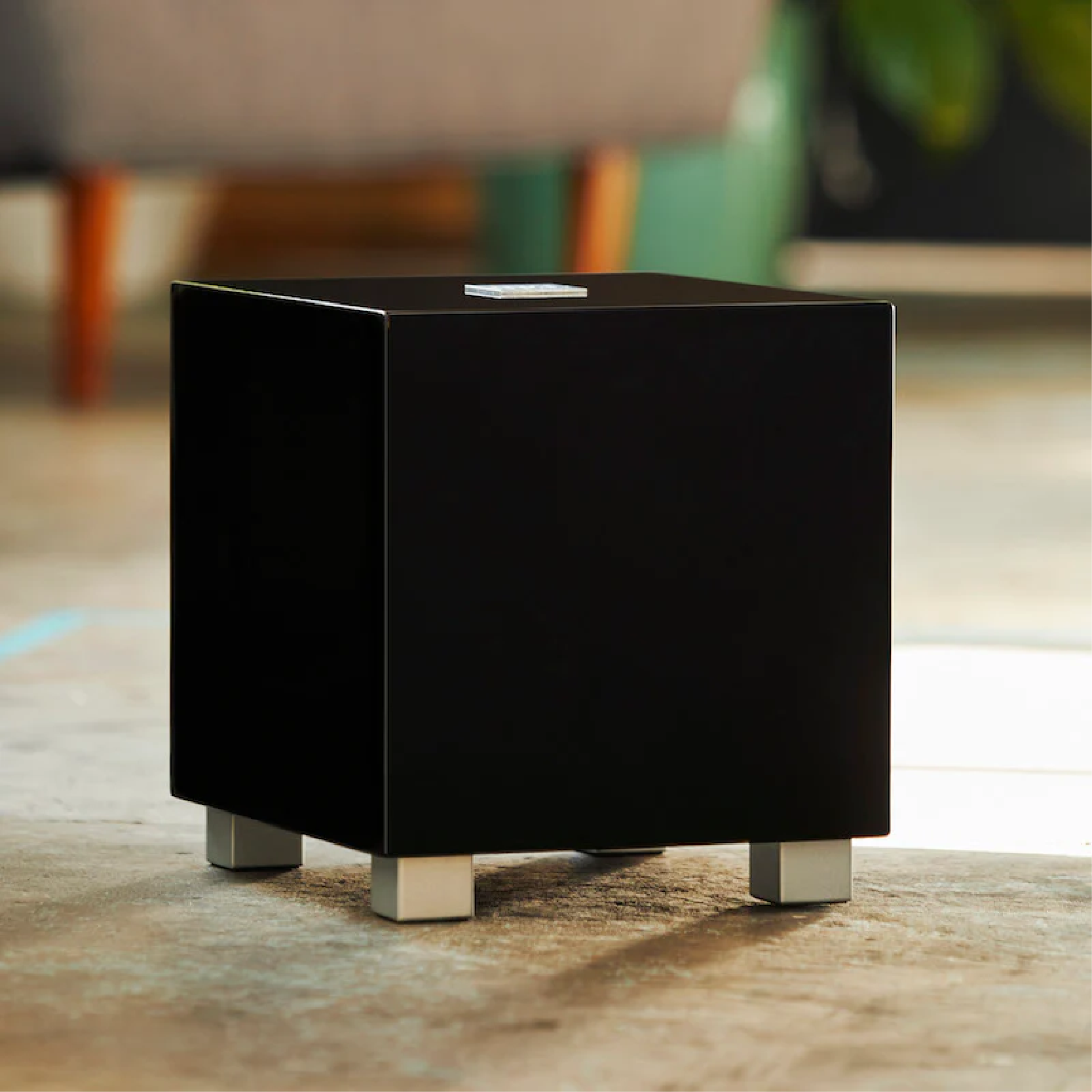
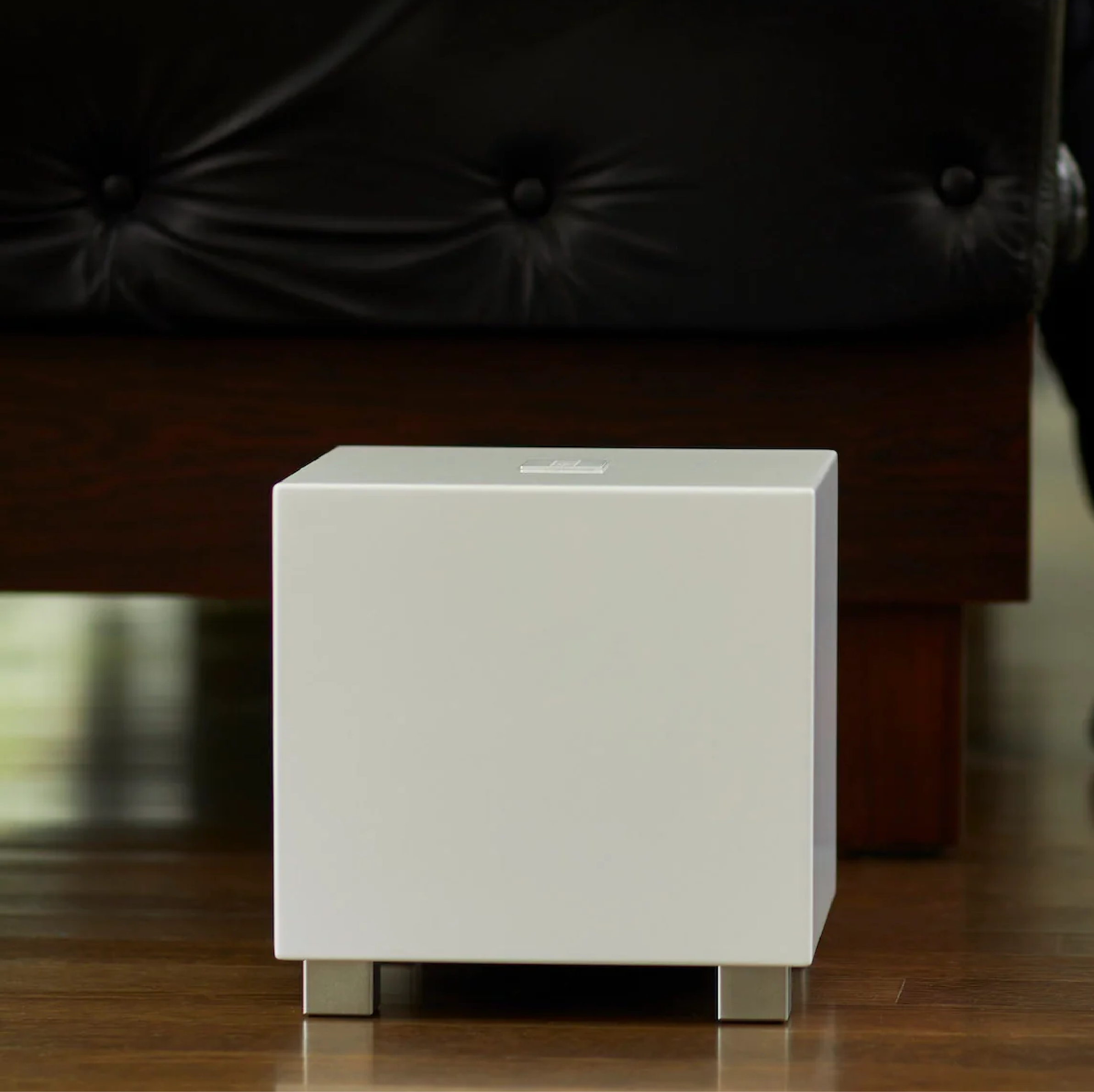
REL Tzero MKIII (549 €)
Ultra-compact 20 cm cube, 7 kg. NextGen Class D amplifier 100 W, 16.5 cm aluminium driver, sealed enclosure, 37 Hz. Paired with bookshelf speakers, the effect is striking: you go from small speakers to the impression of a large three-way floor-stander. Five-coat piano lacquer, black or white. Rooms ≤ 20 m².
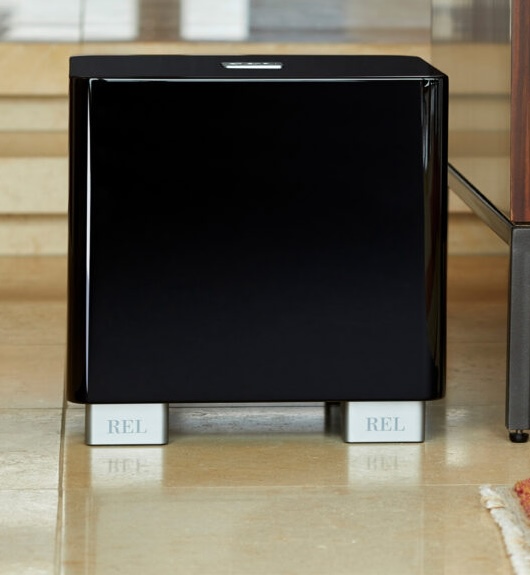
REL T/5x (855 €)
Class A/B amplifier 125 W, 20 cm FibreAlloy™ driver + 20 cm passive radiator, 32 Hz. Neutral and transparent, it widens the soundstage without drawing attention to itself. Five-coat piano lacquer. Rooms 15–25 m².
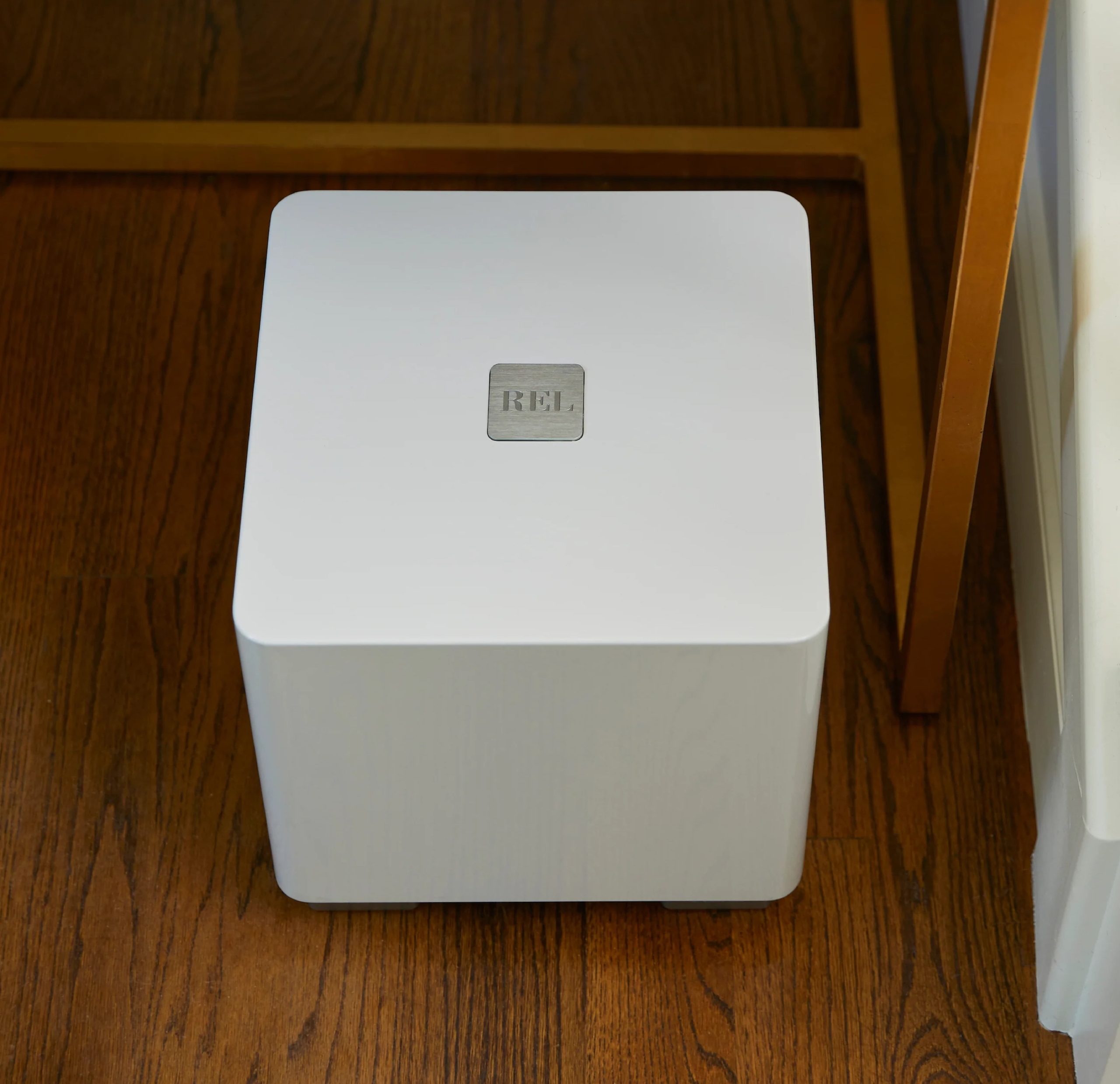
REL T/7x (1 289 €)
Class A/B amplifier 200 W, 20 cm FibreAlloy™ driver + 25 cm passive radiator, 30 Hz. Remarkable depth, speed and articulation. Triple award winner: The Absolute Sound Editor’s Choice, Hi-Fi+ Award, Audiophile Highly Recommended. Rooms 20–35 m².
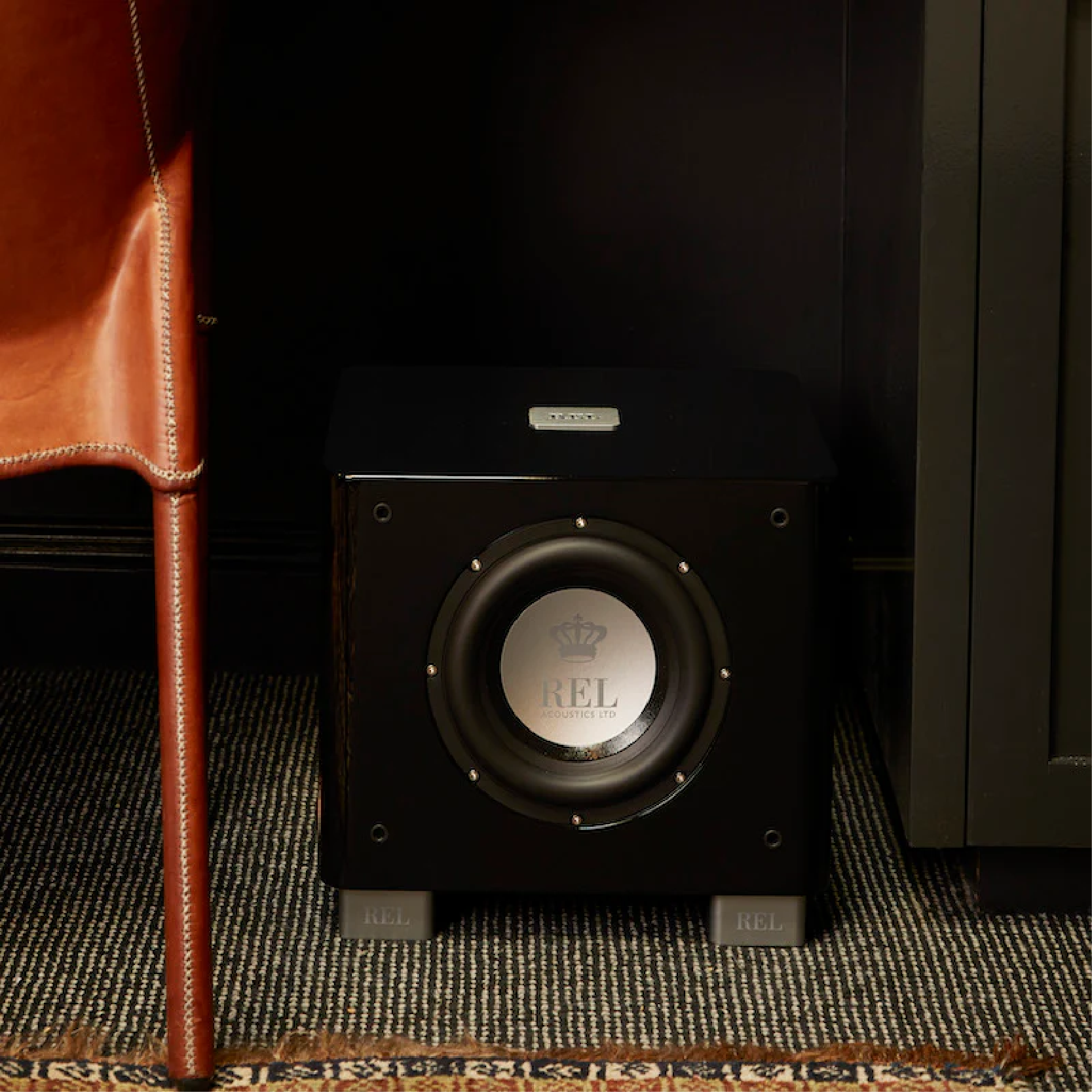
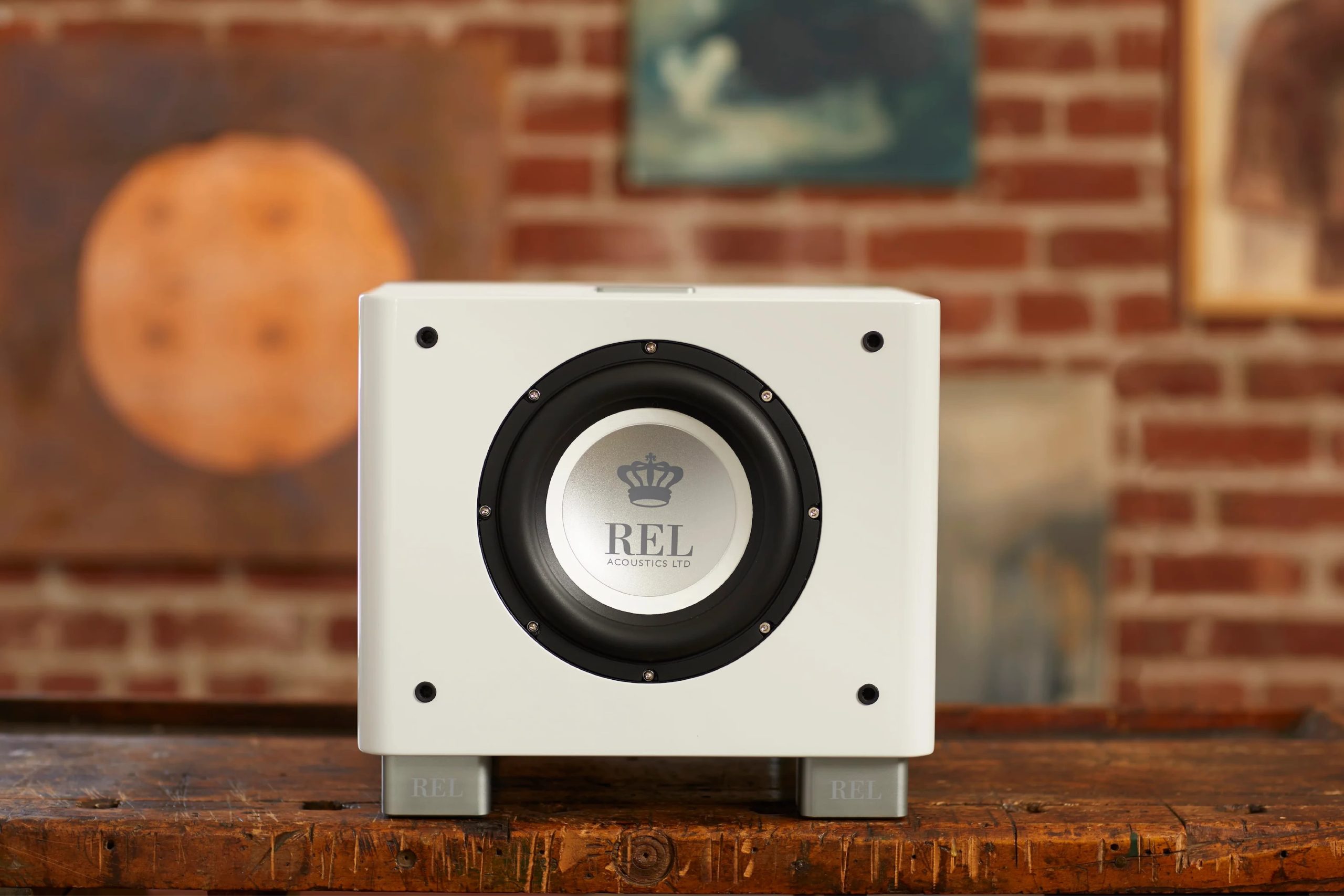
REL T/9x (1 689 €)
Flagship of the T/x range. Class A/B amplifier 300 W, 25 cm FibreAlloy™ driver + 25 cm passive radiator, 27 Hz. Exceptional dynamics and articulation in the deepest bass. Five-coat piano lacquer. Rooms 25–40 m².
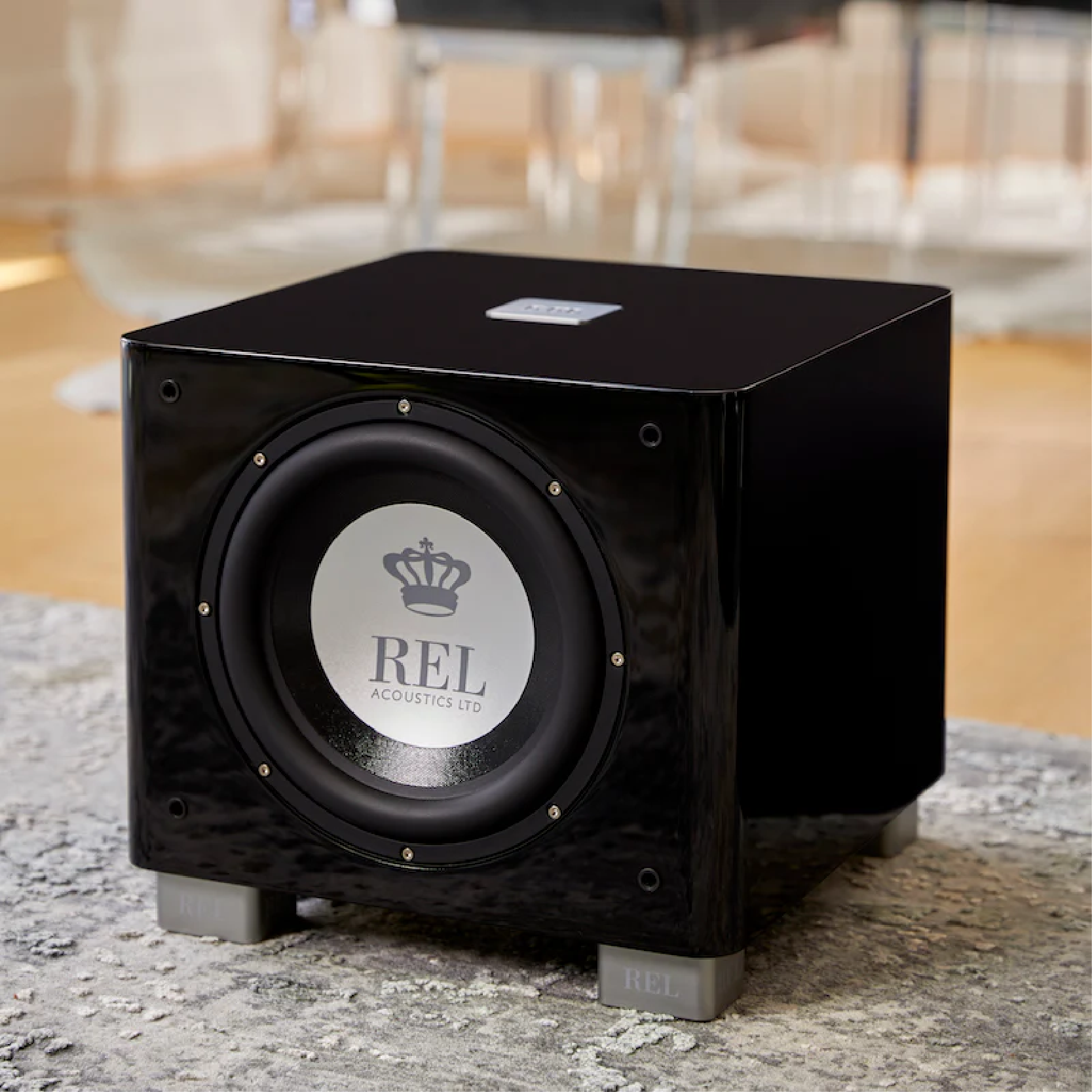
REL S/850 (4 289 €)
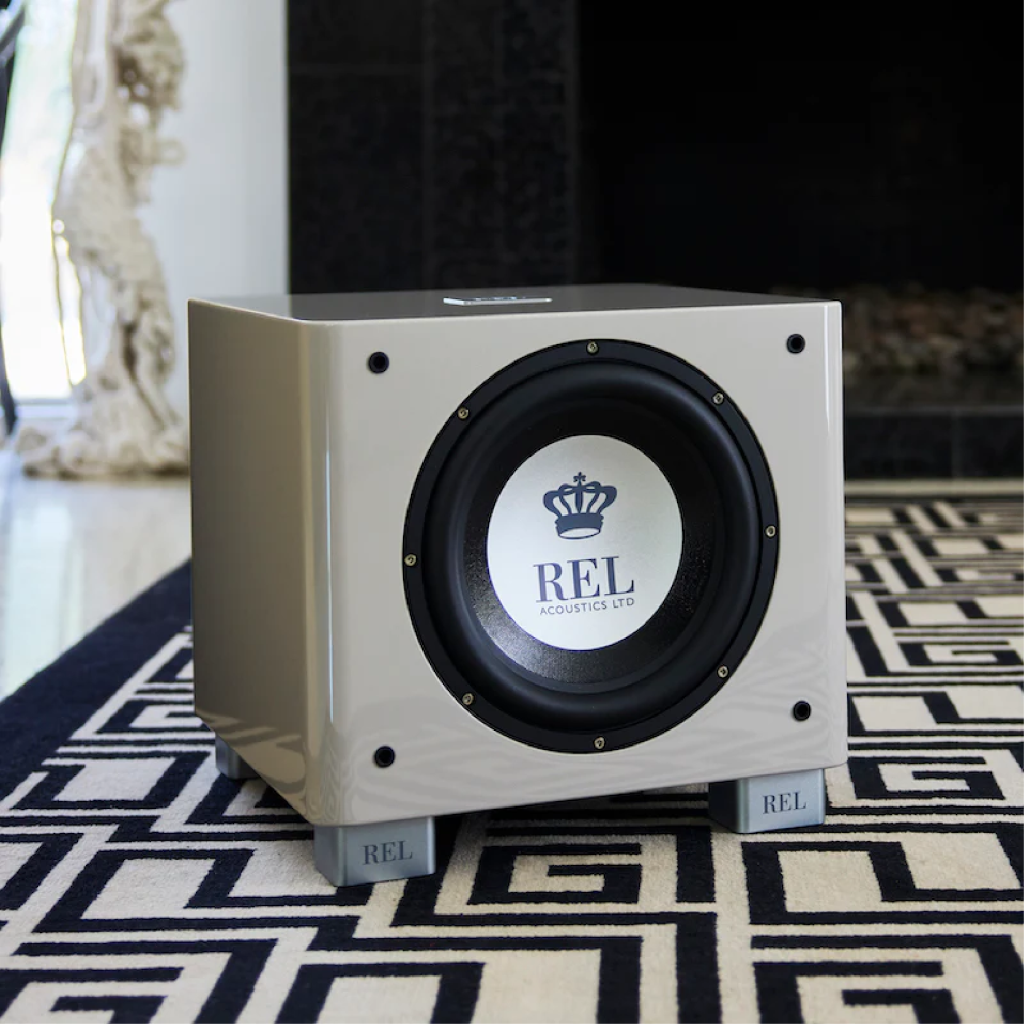
Pure Class D amplifier 900 W, 30 cm CarbonAlloy™ driver + 30 cm passive radiator (80 mm excursion). Thunderous dynamics, lifelike vocals, organic strings. Daisy-chaining possible. Eight-coat piano lacquer. Rooms 30–60 m².
REL S/550 (3 589 €)
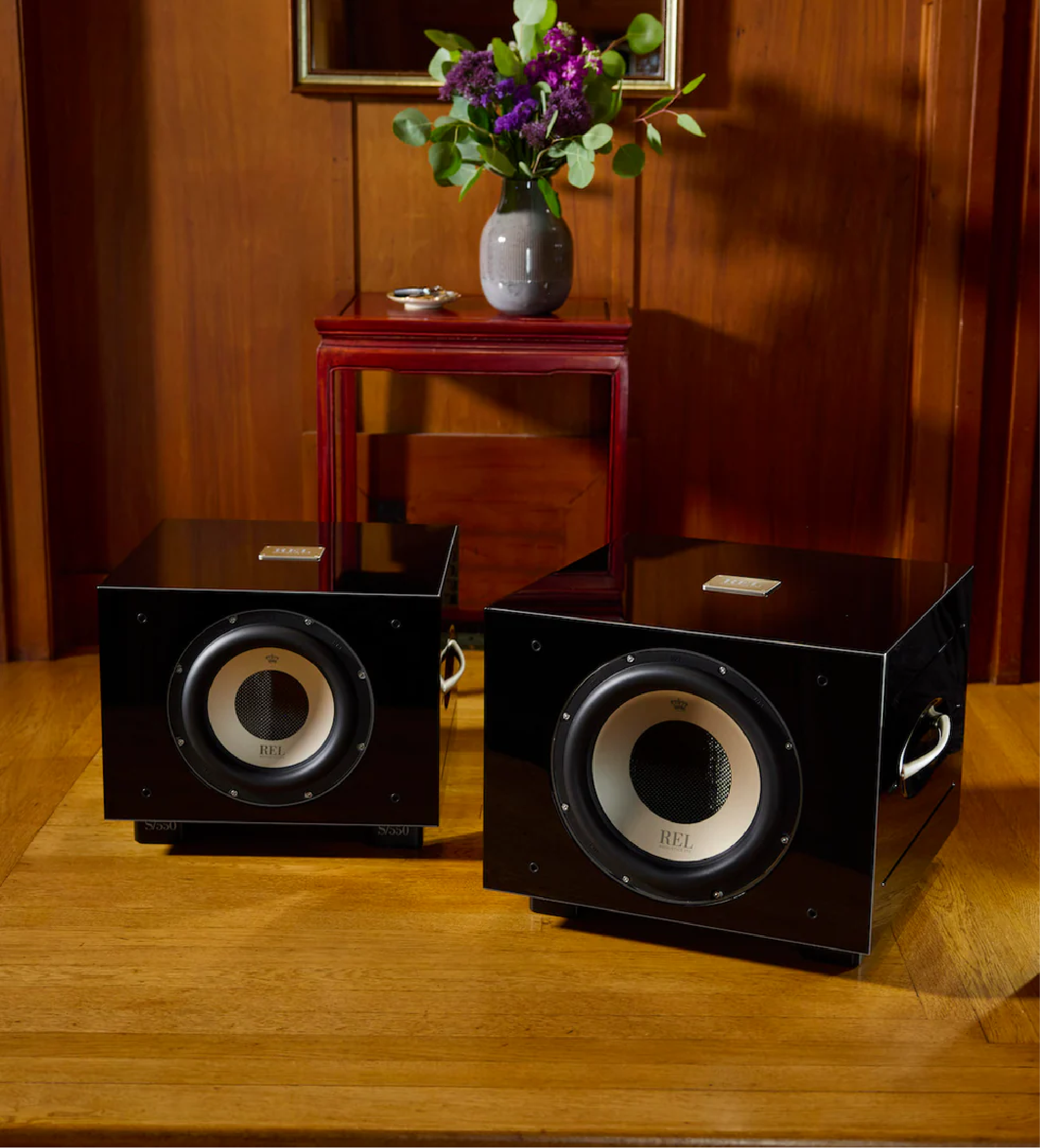
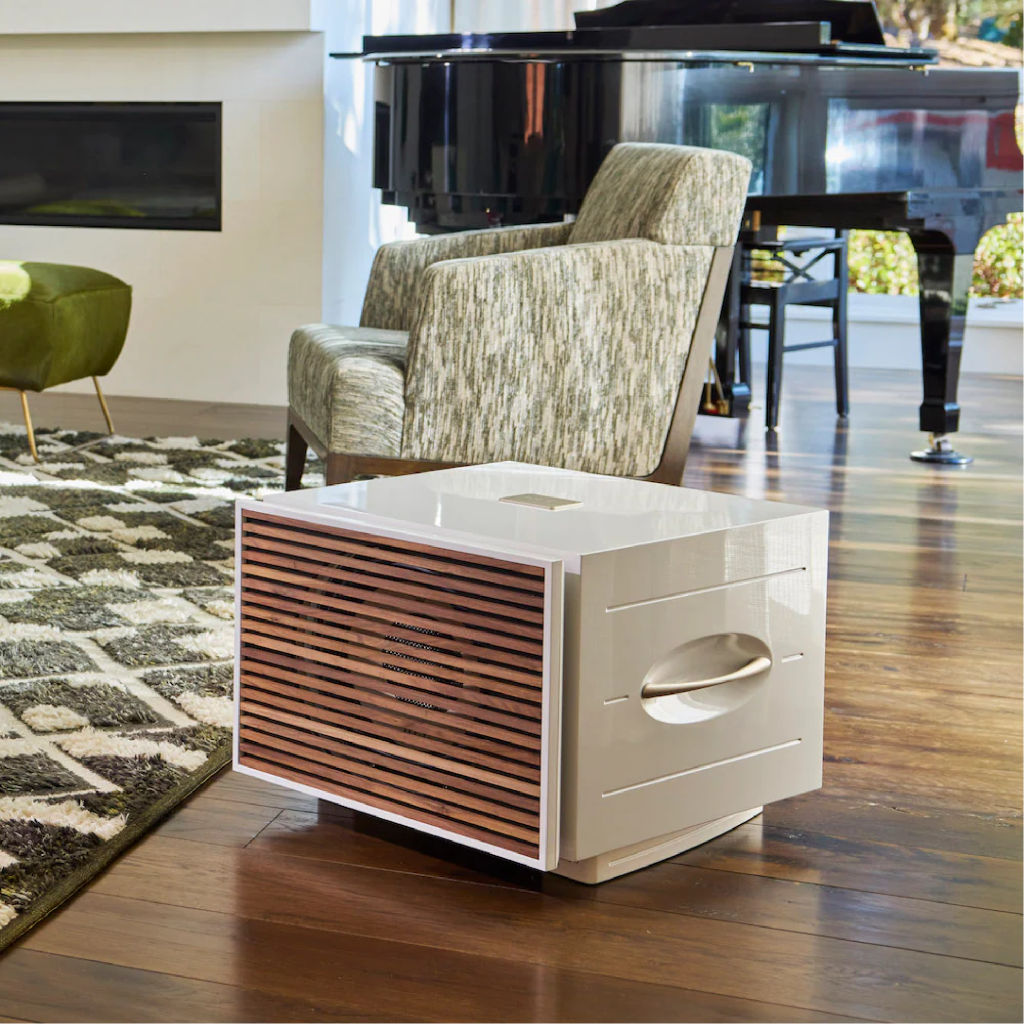
Pure Class D amplifier 600 W, 25 cm CarbonAlloy™ driver + 30 cm carbon/carbon passive radiator, 19 Hz. 2nd generation analogue PerfectFilter™. Ultra-fast transients. Line Array stacking possible. Eight-coat piano lacquer. Rooms 25–50 m².
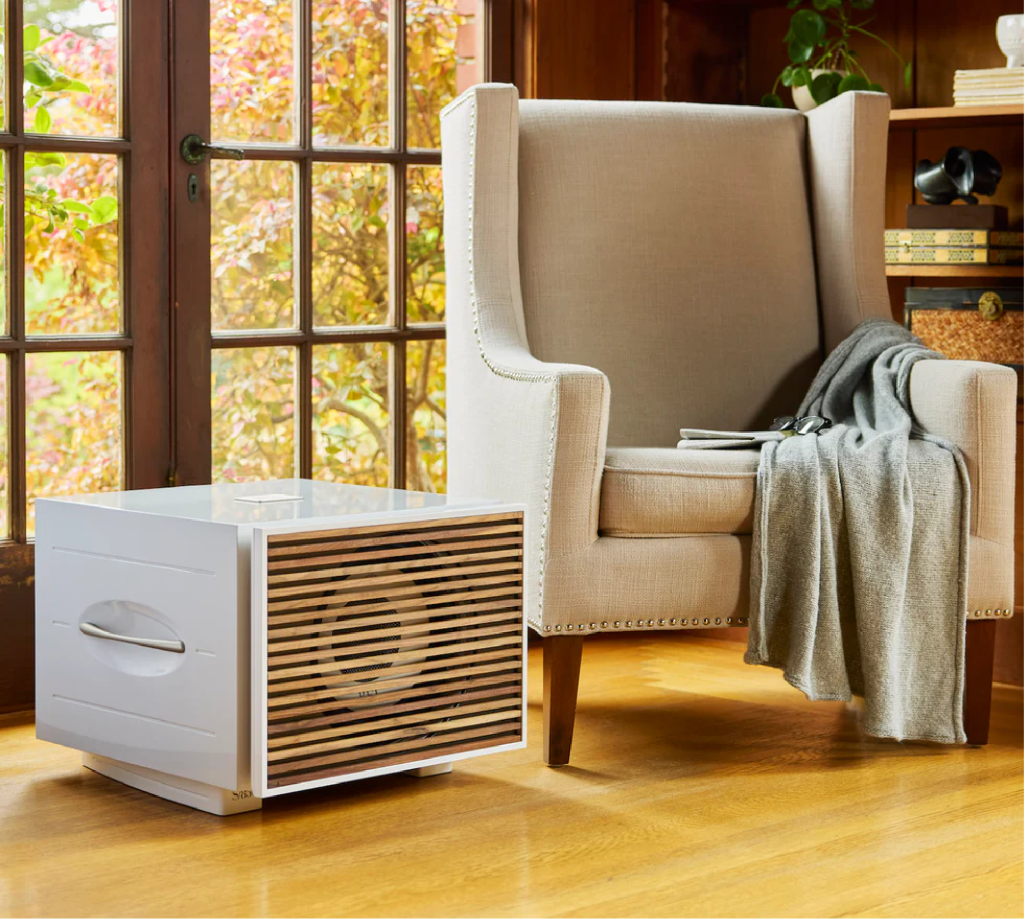
REL Carbon Special Black Label (5 549 €)
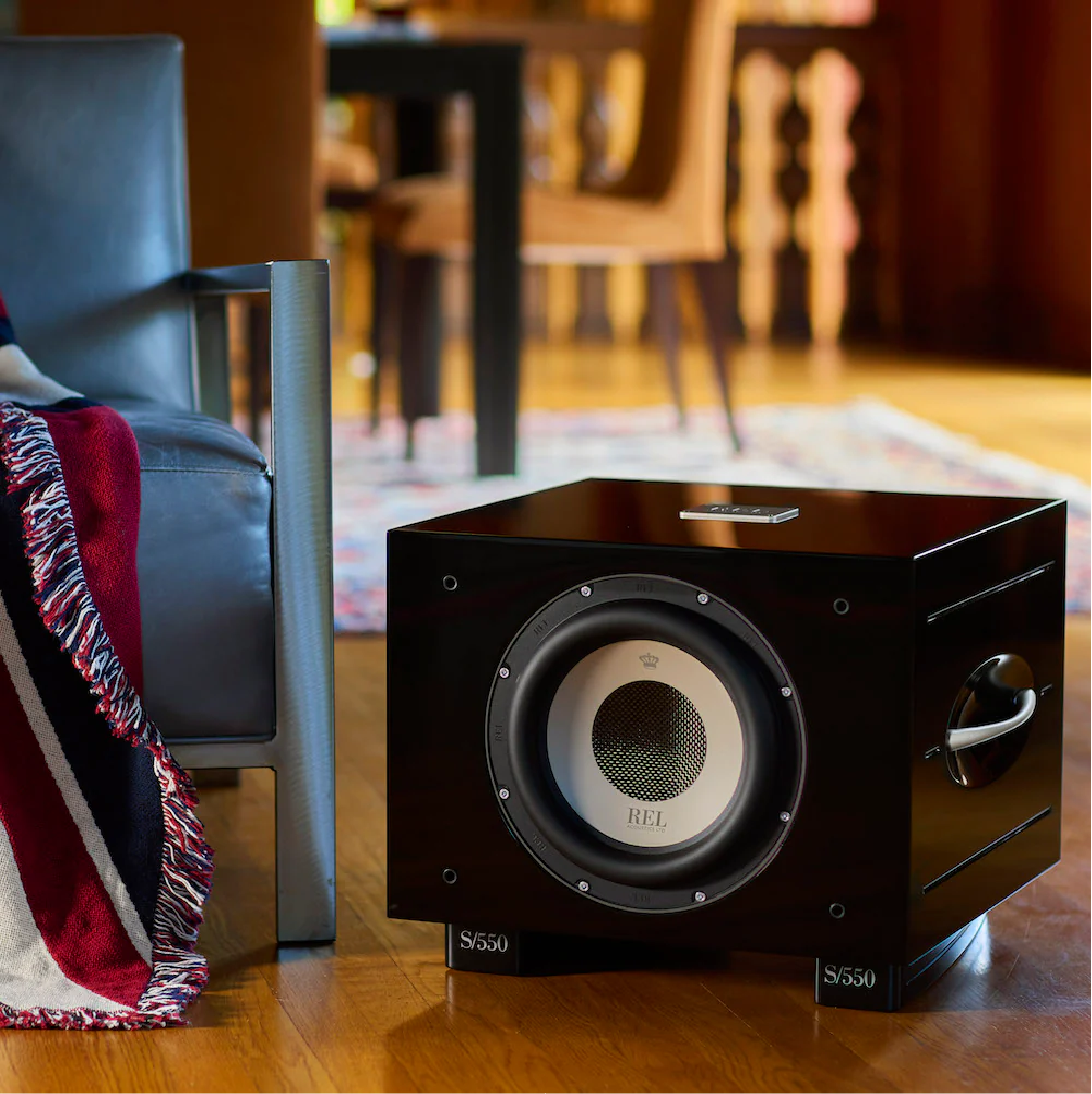
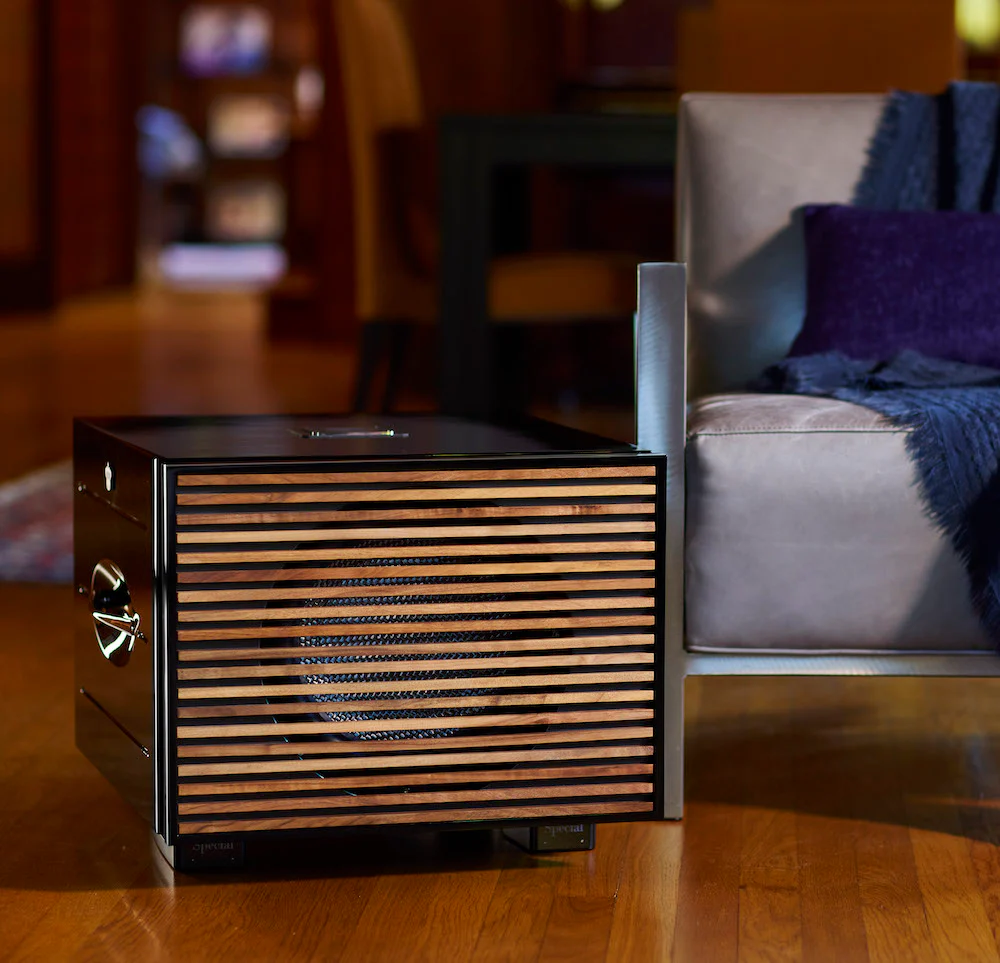
Derived from the REL No.31 (Reference range). 30 cm driver with 100% carbon fibre cone, 900 W continuous / 1,250 W peak amplifier. Organic vocals, textured strings, bass of absolute naturalness. Eight-coat black piano lacquer, premium wood grille. Rooms 30–60+ m².

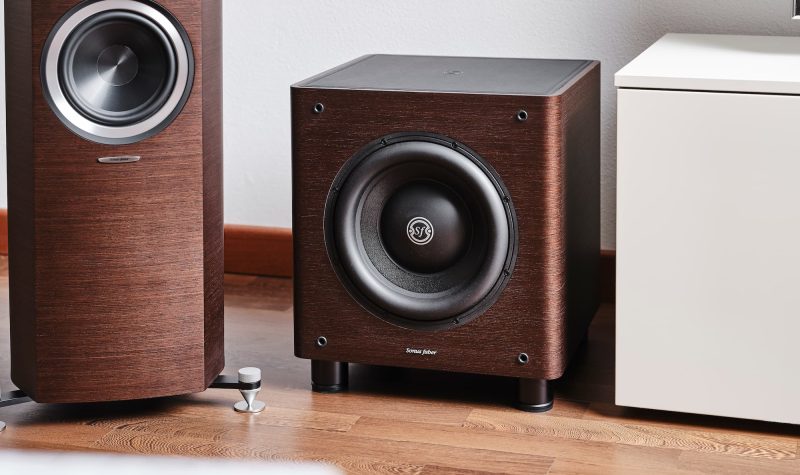
Sonus Faber : italian elegance in the service of bass
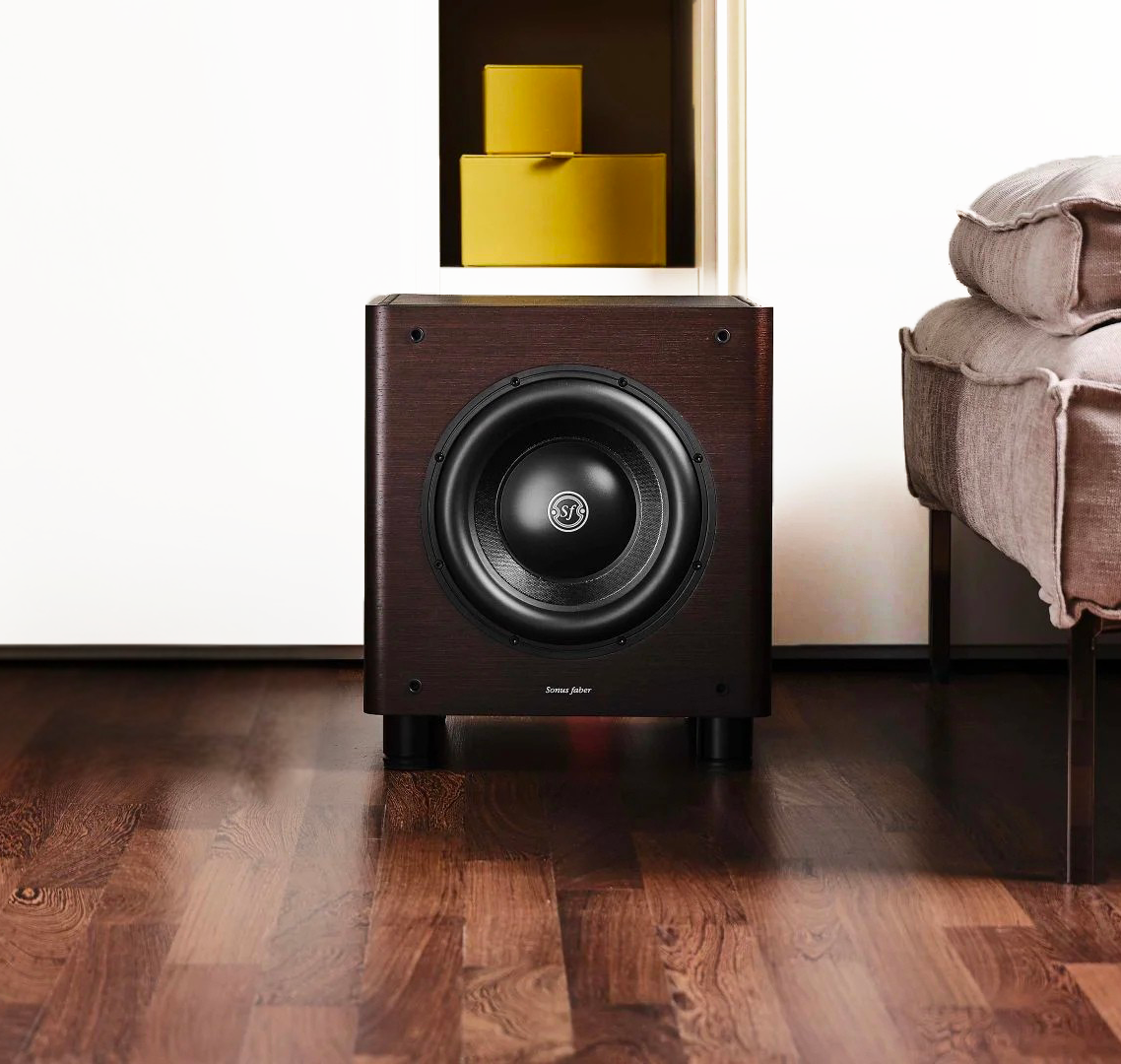
Sonus Faber Gravis I (990 €)
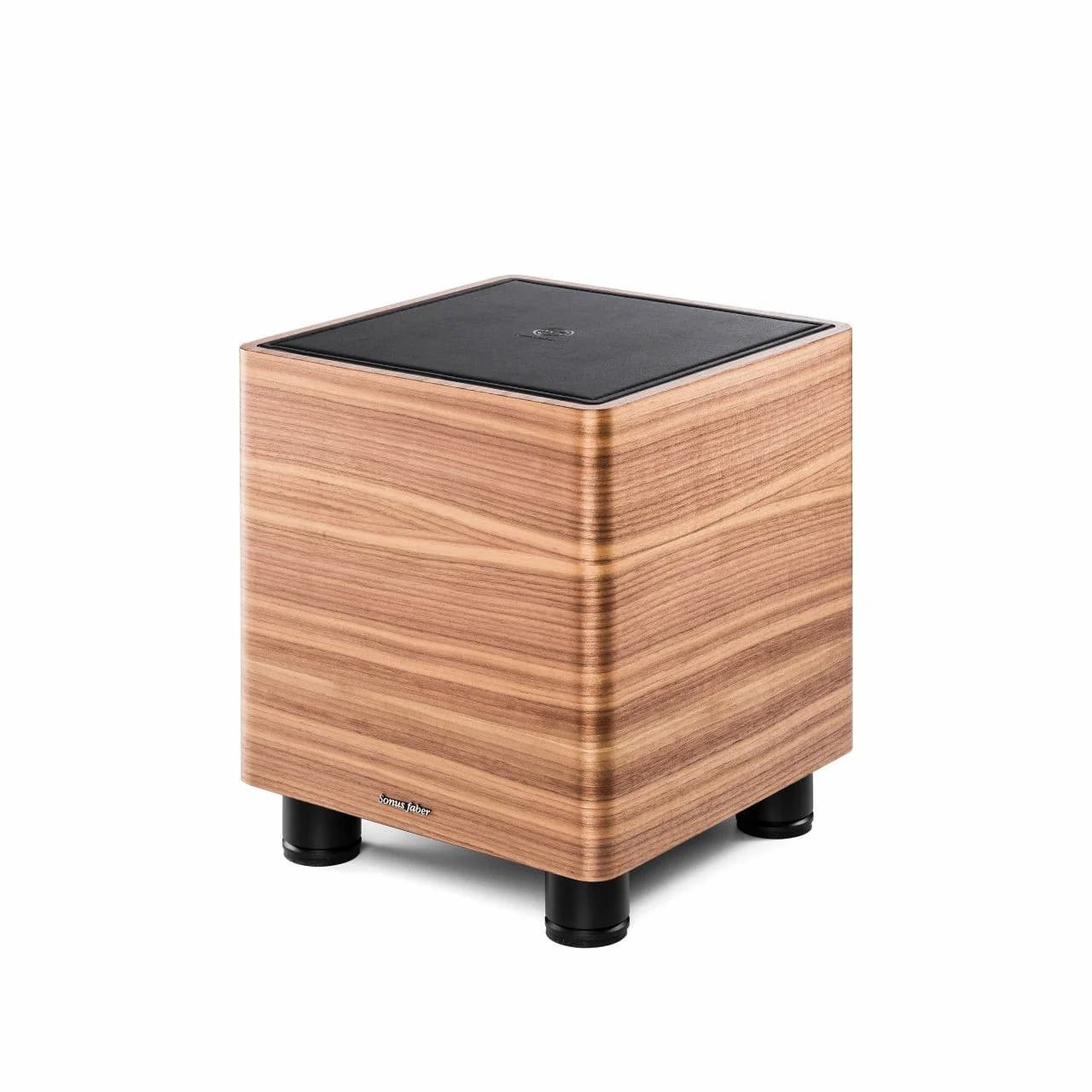
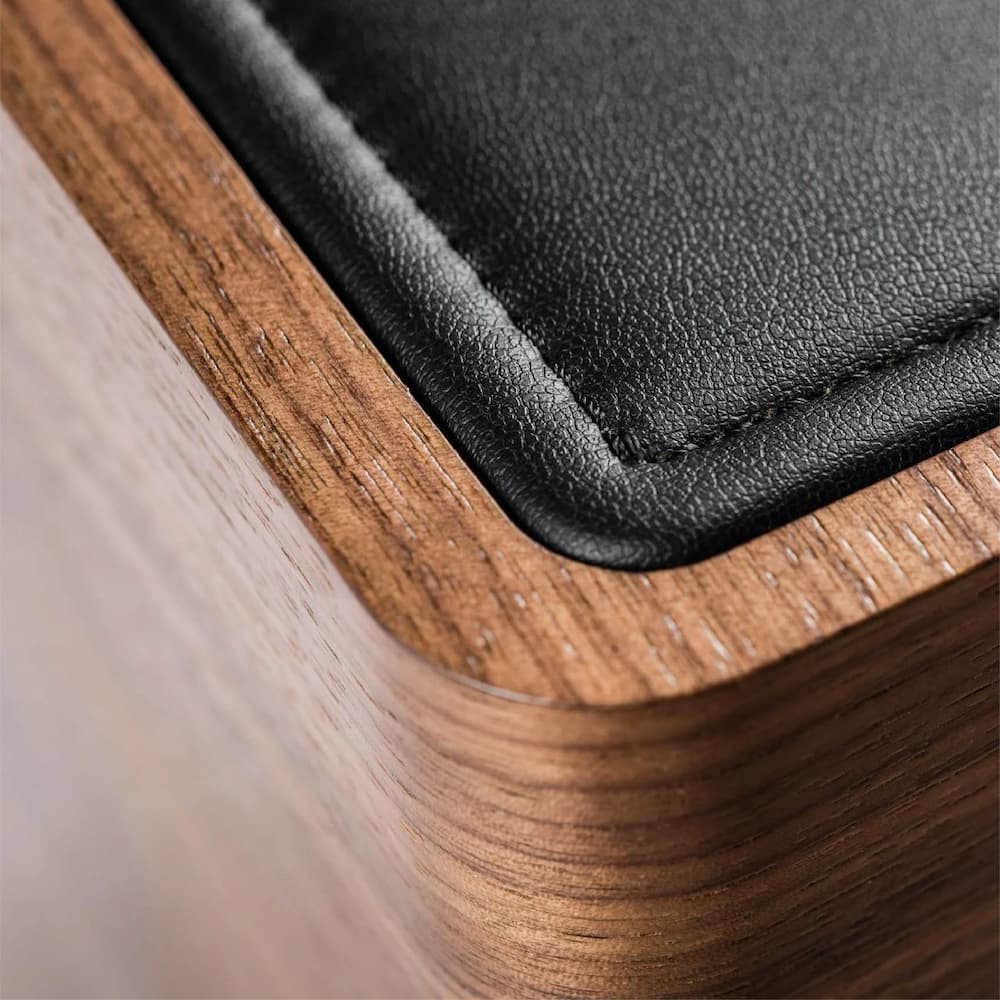
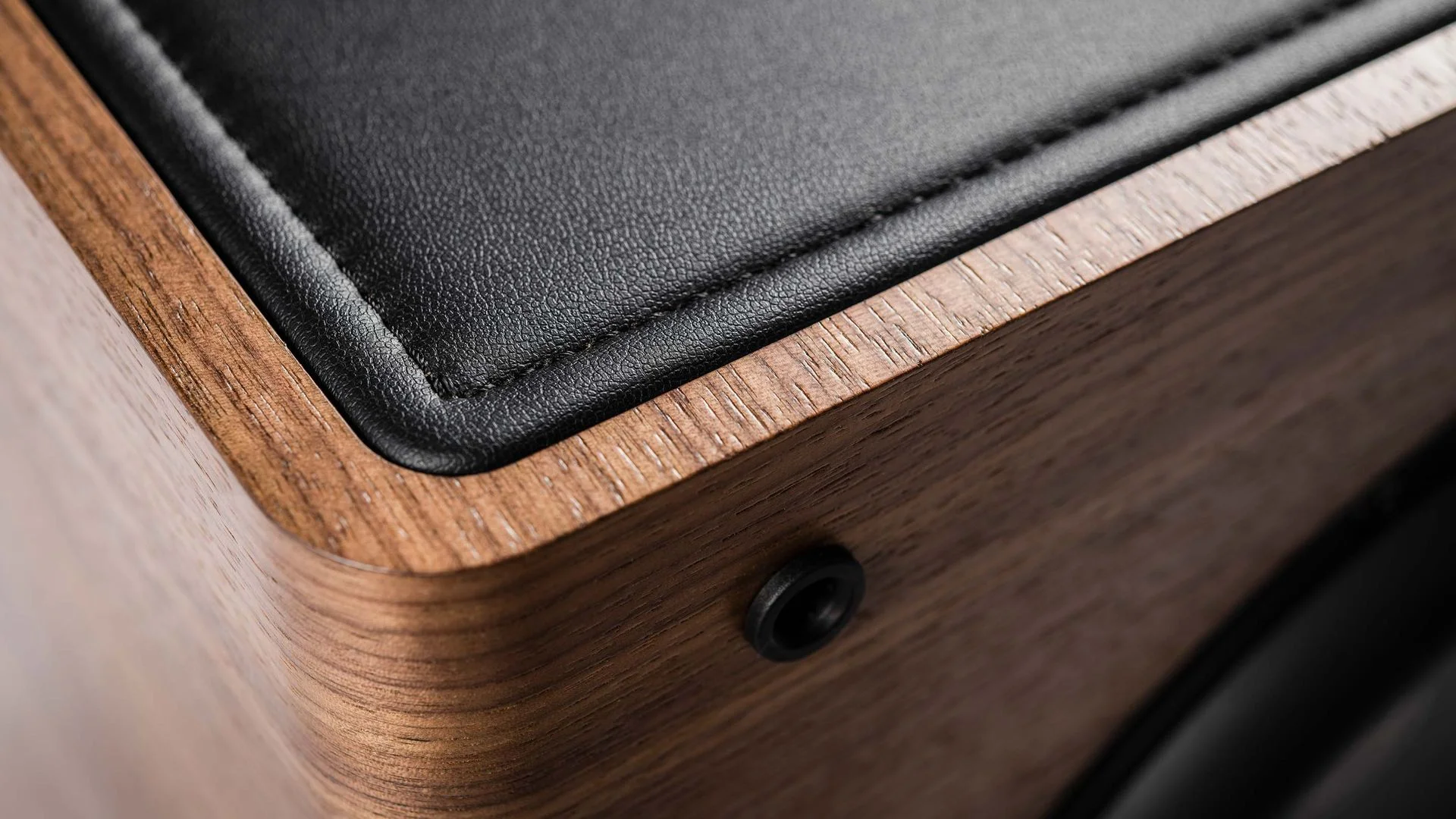
150 W / 250 W peak amplifier, 21 cm downward-firing driver (360° radiation, free placement). Immediate gain in the bass, vocals with greater body, smoothness across the entire spectrum. 4 finishes, leather top. Rooms ≤ 20 m².
Sonus Faber Gravis II (1 390 €)
350 W / 700 W peak amplifier, 26 cm active driver + front-facing passive radiator. Markedly superior definition and dynamics compared to the Gravis I, taut and articulate bass. Same artisanal finishes. Rooms 20–30 m².
Pro-Ject, Focal, et B&W : high-performance, accessible brands
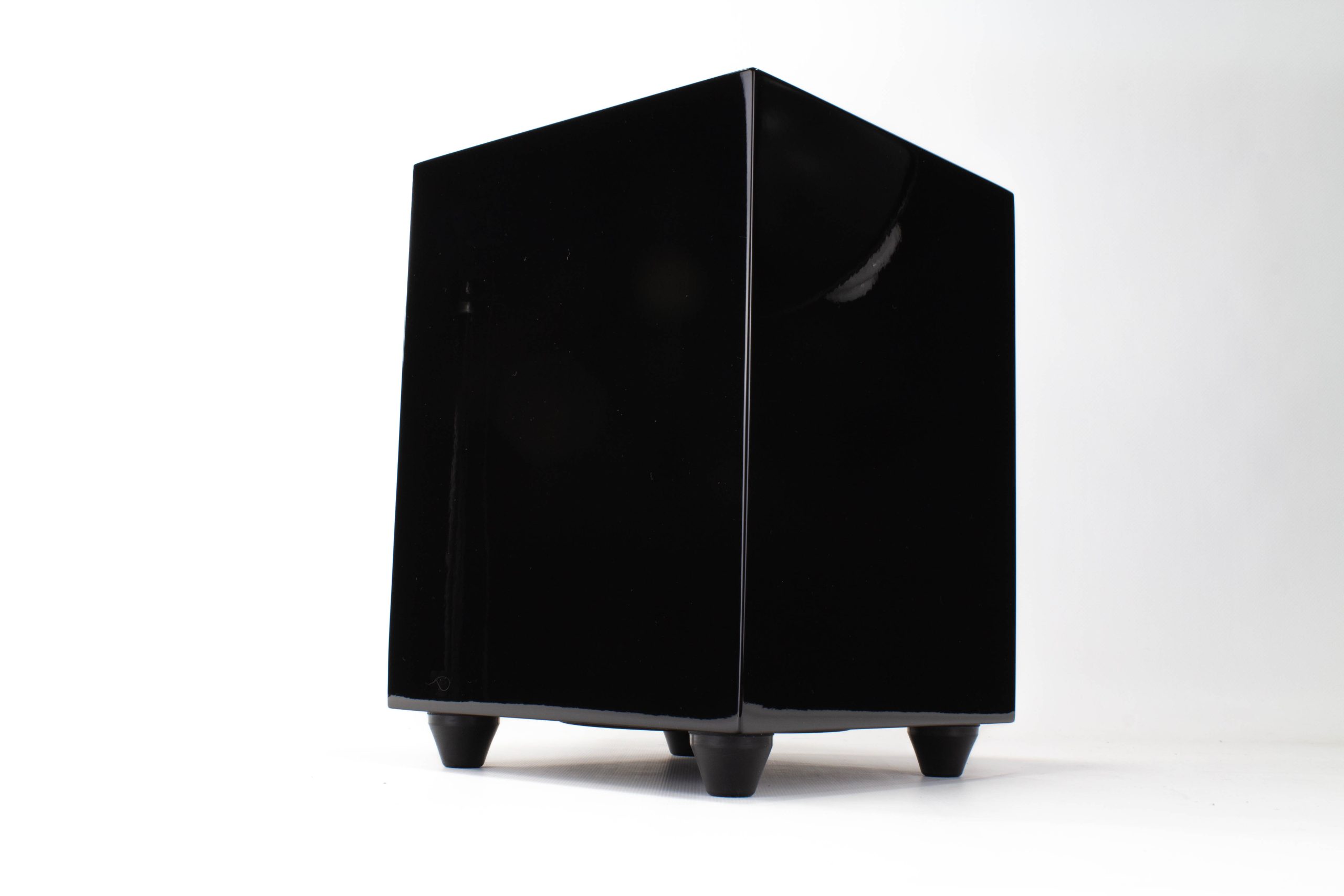
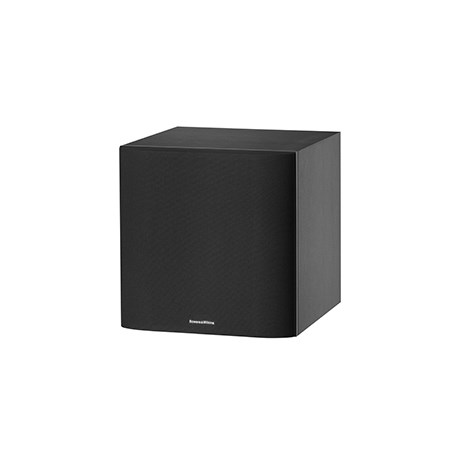
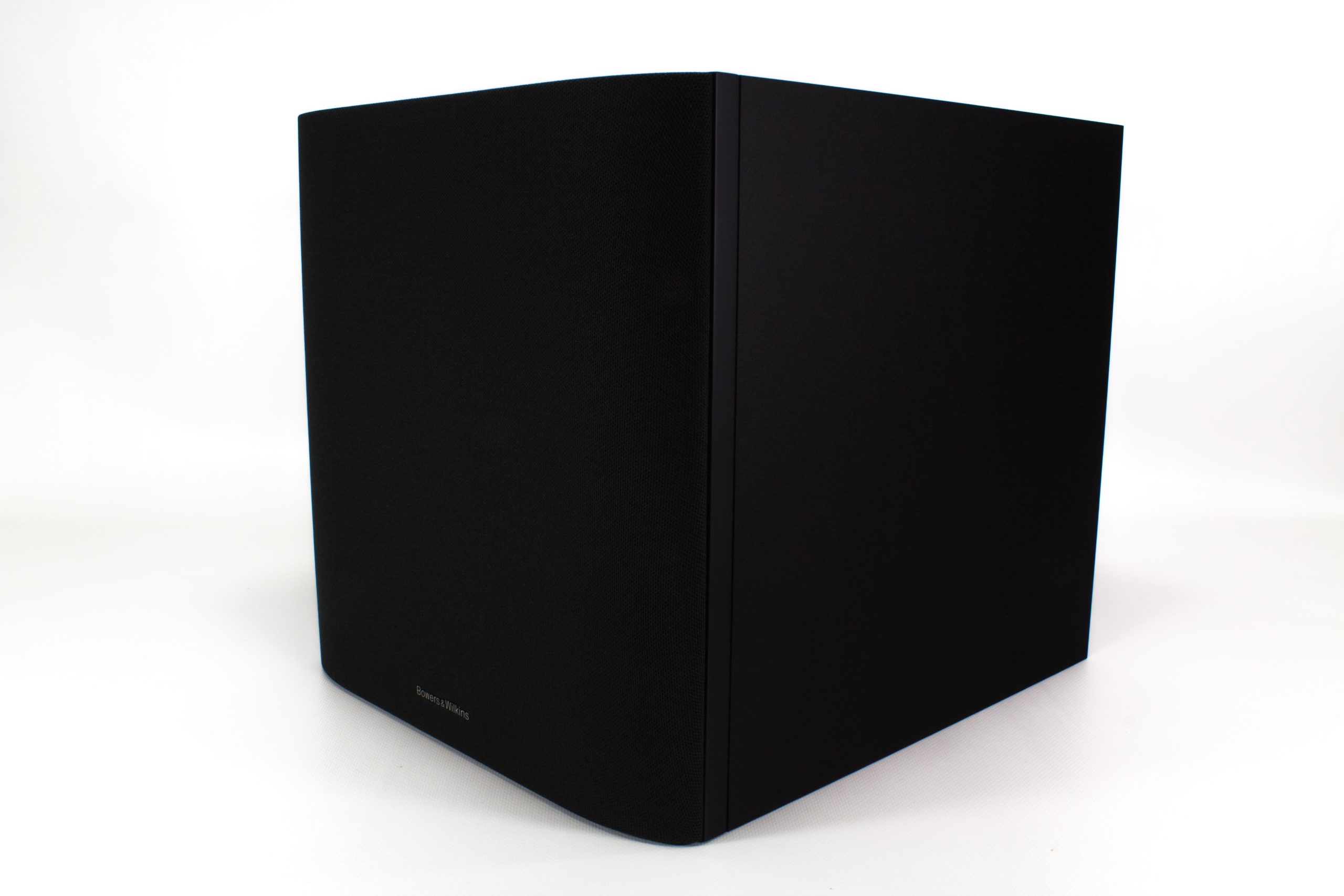
These brands offer subwoofers with excellent value for money. Pro-Ject Audio Systems (Vienna, 1991) for entry-level and Bowers & Wilkins (Worthing, 1966) for the British tradition.
Setup and optimal tuning guide
1. Positioning
Ideally place the subwoofer between your speakers, on the same plane, though not necessarily symmetrically. This minimises phase issues with the low end of your speakers. Avoid room corners, which artificially boost bass and create resonant modes.
2. Crossover frequency
Set the crossover frequency based on the frequency response of your speakers:
- Bookshelf speakers: 50 to 80 Hz is generally optimal
- Floor-standing speakers: 40 to 60 Hz
3. Level and phase
The subwoofer volume should be set so that you cannot pinpoint its location by ear: it should enrich without being noticeable. The phase control (0° or 180°) is adjusted by ear depending on placement to achieve the best sonic coherence.
4. Recommended connection
For stereo HiFi use, the High Level connection (High Level Input via Speakon cable on REL models or speaker terminals) remains the highest quality option in terms of dynamics and consistency with the signal from your speakers. Also consider investing in quality cables and appropriate decoupling to avoid parasitic vibrations.
10 frequently asked questions about subwoofers
What is a subwoofer?
A subwoofer is a loudspeaker dedicated to reproducing low frequencies, typically below 120 Hz. It complements your main speakers by adding depth and immersion.
Is a subwoofer useful with floor-standing speakers?
Yes. Even the best floor-standing speakers have limitations in the deep bass range (below 40–50 Hz). A subwoofer extends the spectrum, frees the speakers and improves the overall tonal balance.
Do I need one or two subwoofers?
A single subwoofer already transforms the listening experience. Two subwoofers in stereo distribute bass more evenly across the room and reduce standing waves. REL consistently recommends using a pair.
What is the difference between an active and a passive subwoofer?
An active subwoofer has a built-in amplifier and crossover; simply connect it to the signal source. A passive subwoofer requires an external amplifier. All models offered by maPlatine.com are active.
How do I connect a subwoofer to an amplifier without a Sub Out?
Use the High Level connection: the subwoofer connects in parallel to the amplifier’s speaker terminals via a dedicated cable. This is often the highest quality connection method in HiFi.
Are subwoofers only useful for home theatre?
No. In stereo HiFi, a subwoofer reveals harmonics, widens the soundstage and adds a depth that your speakers alone cannot reproduce. The improvement in musicality is considerable.
What is the best subwoofer on a small budget?
The Pro-Ject Sub Box 50 at €299 is the best entry point. The REL Tzero MKIII at €549 already delivers REL quality in an ultra-compact 20 cm cube format.
Which subwoofer brand should I choose for HiFi?
REL Acoustics (founded in 1990 in Wales) is the world reference for HiFi subwoofers. Sonus Faber (Italy, 1983) excels in musicality and design. B&W (England, 1966) offers excellent value for money.
Where should I place a subwoofer in a room?
Ideally between your speakers, on the same plane, though not necessarily symmetrically. Avoid room corners that artificially boost bass. Experiment: a few centimetres can make all the difference.
Which subwoofer should I choose for a 25 m² room?
For a 25 m² room, the best-suited models are the REL T/7x (1 289 €, 200 W), or the Sonus Faber Gravis II (1 390 €, 350 W).
Un caisson de grave de qualité n’est pas un simple accessoire : c’est un investissement dans votre A quality subwoofer is not a mere accessory: it is an investment in your listening pleasure that radically transforms the way you experience music. Whether it is a Pro-Ject Sub Box 50 at €299 to discover the difference, a REL T/7x at €1,289 to take a decisive step forward, or a REL Carbon Special Black Labelat €5,549 to reach excellence, every model in our selection has been auditioned and validated by our experts in our Rennes listening room.
Explore our full range of subwoofers at maPlatine.comand benefit from the personalised advice of our specialists. For a comparative listening session, book an appointment at our listening room in Rennes, it is the best way to choose the subwoofer that will transform your musical experience.